
Morning hand swelling is often caused by fluid collecting in the tissues while you sleep, staying in one position for hours, a salty meal, warm weather, or temporary inflammation. It may settle after you start moving. However, swelling that keeps returning, lasts into the day, affects only one hand, or comes with pain, redness, numbness, breathing trouble, or swelling elsewhere deserves closer attention.
The pattern matters more than one puffy morning. Notice whether both hands are involved, which joints look swollen, how long the puffiness lasts, and what other symptoms appear. Those details can help separate mild morning hand swelling from a problem that needs medical care.
Quick answer: Occasional mild swelling in both hands that improves with gentle movement may be related to position, heat, or temporary fluid retention. Arrange a medical review if the swelling is unexplained, recurrent, painful, or persistent. Seek urgent help for sudden severe swelling, a hot red hand, fever, breathing difficulty, chest pain, or rapid swelling of the lips, tongue, or throat.
What morning hand swelling means
Swelling develops when extra fluid collects in body tissues or when a joint or nearby tissue becomes inflamed. The medical term for fluid-related swelling is edema. According to MedlinePlus, edema can have simple triggers, such as excess salt or warm weather, but it can also be connected to medicines, pregnancy, or heart, kidney, liver, and lymphatic problems.
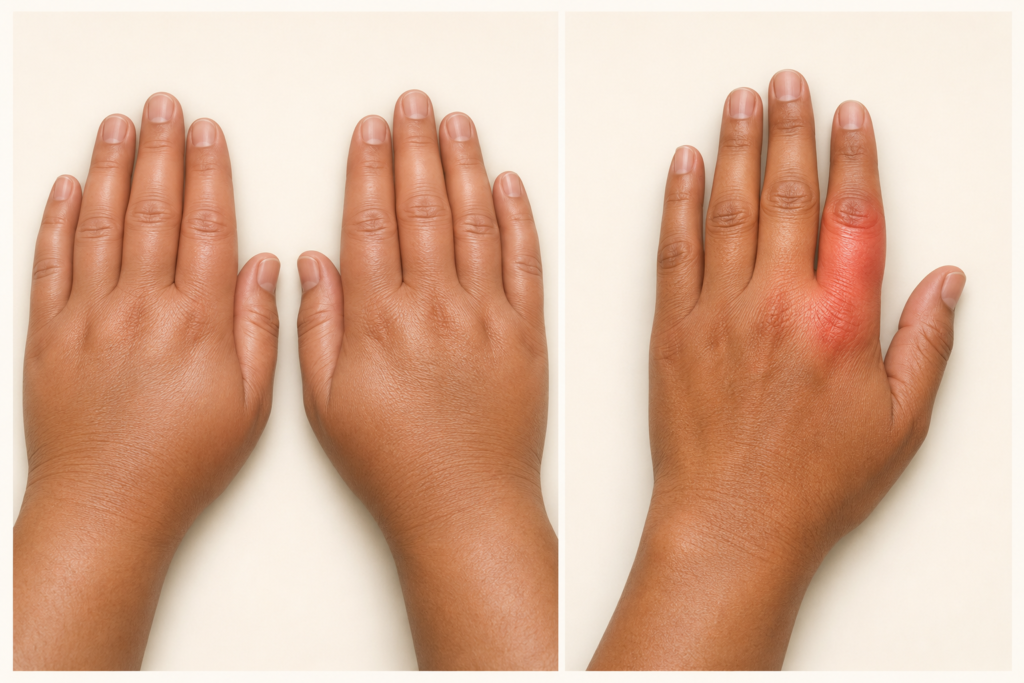
Your fingers may look puffy, rings may feel tighter, the skin may look stretched, or making a fist may feel harder. Morning hand swelling is not a diagnosis by itself. The same appearance can come from fluid retention, joint inflammation, an injury, an infection, or another cause.

8 possible causes of morning hand swelling
1. Sleeping position and hours without movement
Keeping an arm under a pillow, bending the wrist, or remaining in one position for a long time can make puffiness more noticeable after sleep. The NHS includes staying in the same position too long among common contributors to swollen arms and hands. This explanation is more plausible when both hands are only mildly puffy and the swelling eases soon after normal movement begins.
If the main sensation is tingling or loss of feeling rather than visible puffiness, the site’s guide to waking up with numb hands explains sleep-related nerve pressure and the finger patterns that can matter.
2. Temporary fluid retention
A high-salt meal, hot weather, hormonal changes, and long periods of inactivity can contribute to temporary fluid retention. You may notice morning hand swelling together with tight rings or mild puffiness in the face, feet, or ankles. One isolated episode that settles is usually less concerning than swelling that becomes frequent or progressively worse.
Do not assume dehydration is the answer and force large amounts of water. The safer approach is to drink fluids normally, review recent triggers, and seek advice when the cause is unclear.
3. Arthritis and joint inflammation
Inflammatory or wear-related joint conditions can cause swollen, stiff, or painful finger joints. The National Institute of Arthritis and Musculoskeletal and Skin Diseases notes that rheumatoid arthritis often affects the hands and wrists on both sides and may cause morning stiffness lasting longer than 30 minutes. Osteoarthritis can also cause stiffness and swelling around affected joints, although morning stiffness is often shorter.
Joint-centered morning hand swelling becomes more important when it repeatedly comes with warmth, tenderness, reduced grip, trouble making a fist, or prolonged stiffness. A clinician needs the full pattern to distinguish arthritis from other causes.
4. Recent injury or overuse
A sprain, strain, hard workout, repetitive gripping, gardening, manual work, or another hand injury can lead to inflammation that is still noticeable the next morning. One hand or one finger may be more affected, and the swelling may sit near the injured area.
Check for bruising, tenderness, reduced movement, or a clear event before the swelling began. Significant pain, deformity, loss of movement, or swelling after a major injury needs prompt assessment.
5. A medicine side effect
Some medicines can contribute to edema. Examples may include certain blood pressure medicines, steroids, hormones, and other drugs, but the likelihood depends on the exact medicine and the person. Do not stop or alter a prescribed medicine because of morning hand swelling. Contact the prescriber or a pharmacist to review the timing and possible side effects.
6. Pregnancy-related swelling
Mild gradual swelling can occur during pregnancy, but a sudden increase in swelling of the hands or face needs attention. The American College of Obstetricians and Gynecologists lists swelling of the face or hands among possible preeclampsia symptoms, especially when it occurs with a headache that will not go away, vision changes, upper abdominal or shoulder pain, nausea, or breathing difficulty.
If you are pregnant or recently gave birth and develop these symptoms, contact your maternity care team urgently. Do not rely on a normal feeling or on dizziness alone; the related guide on high blood pressure and dizziness explains why hypertension can be symptomless.
7. Infection or an allergic reaction
Swelling that is red, hot, tender, rapidly worsening, or associated with fever may be caused by an infection and should be assessed promptly. A bite, cut, hangnail, puncture, or skin break can provide a clue. On darker skin, redness may be subtle, so warmth, pain, and change from the surrounding skin also matter.
Sudden puffiness can also occur with angioedema, a deeper allergic-type swelling. Rapid swelling of the lips, tongue, mouth, or throat, trouble swallowing, wheezing, or breathing difficulty is an emergency. Contact local emergency services.
8. A wider fluid-balance or circulation problem
Less commonly, recurring or persistent morning hand swelling can be part of more generalized edema related to kidney, liver, heart, venous, or lymphatic problems. These conditions are more likely to cause other clues, such as swelling in the legs or face, breathlessness, rapid unexplained weight change, abdominal swelling, reduced urination, or persistent fatigue.
If the hand is also unusually cold, pale, blue, or painful, read the guide to cold hands and feet without fever. If swelling comes with tingling or reduced sensation in several limbs, the guide to numb hands and feet causes may help you describe the nerve and circulation clues to a clinician.
Morning hand swelling pattern clues to track
A short symptom record can make morning hand swelling easier to explain at an appointment. Note the side, duration, triggers, and accompanying symptoms rather than trying to diagnose the cause yourself.
| Pattern you notice | What it may suggest | Sensible next step |
|---|---|---|
| Mild puffiness in both hands that settles after movement | Position, heat, or temporary fluid retention may be contributing | Track recurrence and recent triggers |
| Swollen, warm joints with prolonged morning stiffness | An inflammatory joint problem may need evaluation | Arrange a medical appointment |
| One hand or finger is red, hot, and painful | Injury, infection, or localized inflammation is possible | Seek prompt medical advice |
| Swelling with numbness, tingling, or weak grip | Nerve pressure or another hand or wrist problem may be involved | Book a review if recurrent or worsening |
| Hand swelling plus leg or facial swelling, breathlessness, or urine changes | A wider fluid-balance problem needs assessment | Contact a healthcare professional promptly |
What may safely help mild morning hand swelling
When morning hand swelling is mild, there is an obvious harmless trigger, and no warning signs are present, a few low-risk steps may help:
- Remove tight rings early, before swelling increases. Seek urgent help if a ring traps a painful, discolored, or increasingly swollen finger.
- Open and close the hands gently and continue normal comfortable movement.
- Raise the hands and forearms on pillows for a short period.
- Drink fluids normally and avoid staying in one position for hours.
- Notice whether heat or a very salty evening meal repeatedly precedes the puffiness.
- Avoid tight sleeves or wristbands while the area is swollen.
The NHS guidance on swollen arms and hands supports gentle movement, normal hydration, elevation, and avoiding long periods in one position. Compression gloves, water pills, anti-inflammatory medicines, and major salt restriction are not universal solutions; use them only when a qualified professional says they are appropriate for the cause.
When to arrange a medical appointment
Book a routine or prompt appointment for morning hand swelling when:
- it keeps returning without a clear trigger;
- it lasts well into the day or is getting worse;
- you have persistent joint pain, warmth, or stiffness;
- your grip is weaker or hand movement is becoming difficult;
- numbness or tingling happens repeatedly;
- swelling also affects the face, legs, feet, or abdomen;
- a new medicine and the swelling began around the same time; or
- you have diabetes, kidney, liver, heart, joint, or lymphatic disease.
Unexplained morning hand swelling should not be dismissed simply because it improves later. A repeated pattern can still provide useful information about inflammation, medication effects, or fluid balance.
Urgent warning signs
Seek urgent medical care if swelling is sudden, severe, very painful, hot, or rapidly worsening. Contact local emergency services immediately if hand swelling occurs with:
- shortness of breath, chest pain, or chest tightness;
- rapid swelling of the face, lips, tongue, mouth, or throat;
- difficulty swallowing, wheezing, faintness, or confusion;
- fever with a red, hot, tender hand or red streaks moving up the arm;
- a blue, very pale, cold, or severely painful hand;
- a major injury, visible deformity, or loss of movement; or
- pregnancy or recent childbirth with sudden hand or facial swelling, severe headache, vision changes, upper abdominal pain, nausea, or breathing difficulty.
What a healthcare professional may ask or check
A clinician may ask when the morning hand swelling started, whether it affects one or both hands, how long it lasts, and whether it follows heat, salty food, injury, repetitive work, pregnancy, or a medicine change. They may also ask about joint stiffness, pain, numbness, fever, breathlessness, urine changes, and swelling elsewhere.
The examination may include the skin, joints, movement, circulation, sensation, and other areas of swelling. Depending on the pattern, tests may include blood or urine tests and, in selected cases, an X-ray, ultrasound, or other imaging. Not everyone needs every test.
Frequently asked questions
Why are my hands swollen when I wake up?
Possible reasons include sleeping position, temporary fluid retention, heat, a salty meal, joint inflammation, overuse, medicines, pregnancy, or another medical condition. The duration, side, pain, warmth, stiffness, and other symptoms help determine how urgently it should be checked.
Is morning hand swelling a sign of arthritis?
It can be, especially when finger or wrist joints are repeatedly swollen, warm, painful, and stiff after waking. However, morning hand swelling has many other causes, so the symptom alone cannot confirm arthritis.
Can too much salt make my fingers puffy the next morning?
Excess salt can contribute to fluid retention in some people. If puffiness repeatedly follows very salty meals, record that pattern. Persistent or worsening swelling still needs assessment rather than being blamed on diet automatically.
Should I remove my rings when my hands swell?
Yes, remove rings early if you can do so gently. Get urgent help if a ring is stuck and the finger is increasingly painful, numb, blue, pale, or severely swollen. Do not force it and injure the skin.
When is morning hand swelling an emergency?
Morning hand swelling is an emergency when it comes with breathing or swallowing difficulty, chest pain, rapid facial or throat swelling, severe pain, a cold or discolored hand, a major injury, or signs of serious infection. Sudden hand or facial swelling with preeclampsia warning signs during pregnancy or after childbirth also needs urgent care.
Bottom line
Morning hand swelling is often temporary, particularly when it is mild, affects both hands, and improves after comfortable movement. The warning pattern is swelling that is recurrent, prolonged, one-sided, painful, hot, red, or accompanied by symptoms elsewhere in the body. Track the details, use only low-risk measures, and get medical advice when the cause is unclear.
This article is for general educational information only and is not a substitute for professional medical advice, diagnosis, or treatment. Symptoms can have many possible causes. Contact a qualified healthcare professional if you are concerned, especially when symptoms are severe, persistent, new, or worsening. Seek urgent help for emergency warning signs.