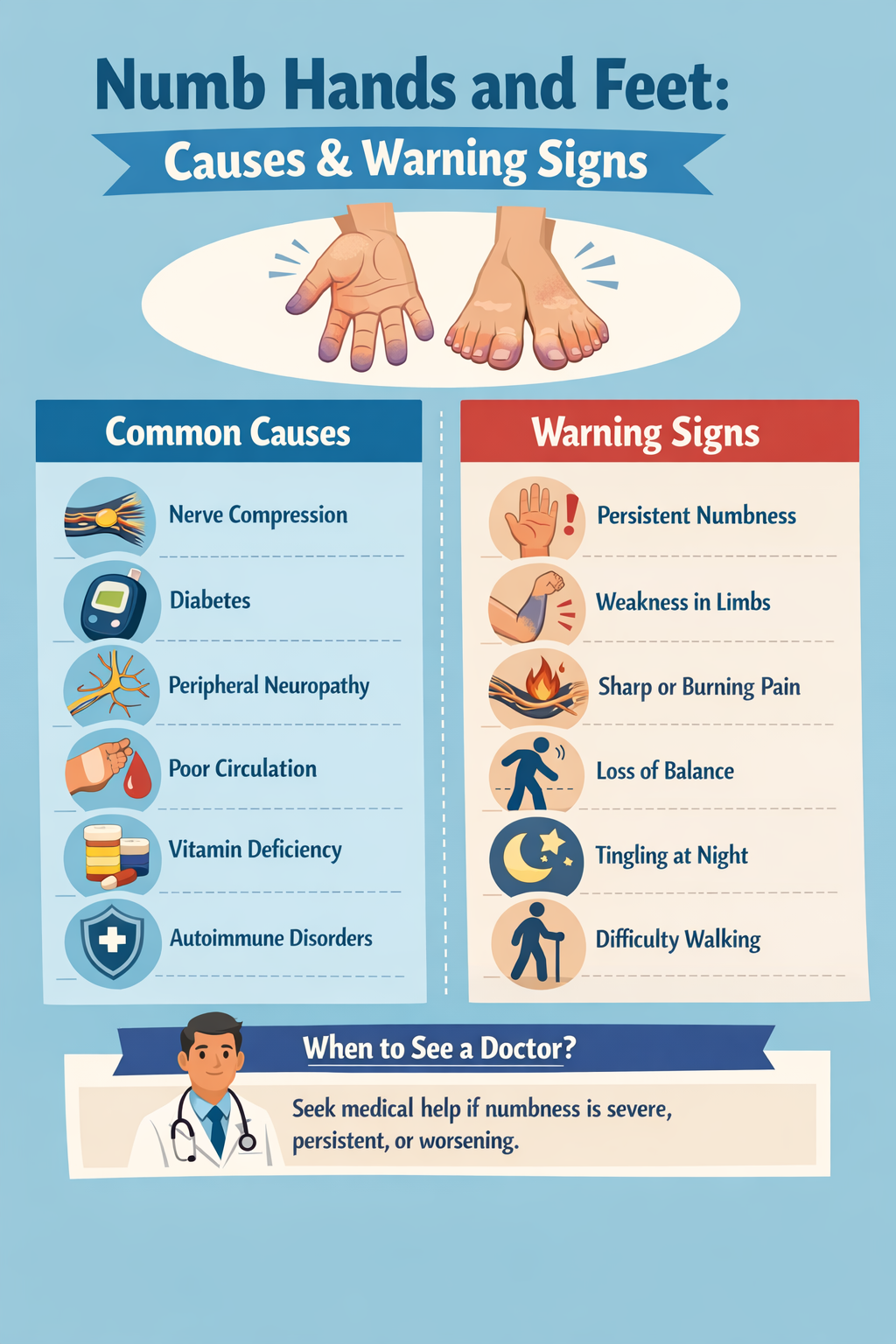
Numb hands and feet causes can range from something temporary, like sitting in one position too long, to nerve, vitamin, circulation, or spine-related problems. Brief tingling that goes away after you move is common. But numbness that keeps coming back, spreads, or happens with weakness, pain, dizziness, or trouble walking is worth taking seriously.
Numbness usually means reduced or altered feeling in part of the body. Some people describe it as tingling, pins and needles, burning, prickling, or a “dead” feeling. The pattern matters. Occasional numbness after pressure on a limb is different from numbness that is frequent, persistent, or getting worse.
What do numb hands and feet mean?
Numbness happens when the nerves that carry sensation are irritated, compressed, or not working properly. Sometimes blood flow problems can also play a role. The hands and feet are common places for this to happen because they contain many small nerves and are often affected first in nerve-related conditions.
9 numb hands and feet causes to know
1. Temporary nerve pressure
This is one of the most common and least serious causes. It can happen if you sleep on your arm, cross your legs for too long, sit awkwardly, or keep your wrist bent for a long time. The numbness usually improves once you change position and normal sensation returns.
2. Peripheral neuropathy
Peripheral neuropathy is one of the better-known numb hands and feet causes. It means the nerves outside the brain and spinal cord are damaged or not working as they should. It often starts in the feet and may later affect the hands. Along with numbness, some people notice tingling, burning pain, balance problems, or weakness.
3. Repetitive strain or hand nerve compression
If symptoms are mainly in the hands, repeated wrist or elbow movement may be involved. This can happen with typing, gripping, tool use, or repeated bending of the wrist or elbow. Carpal tunnel syndrome and other compression problems may cause numbness in specific fingers, nighttime symptoms, or hand weakness.
4. Vitamin deficiencies
Some vitamin deficiencies can affect nerve health, especially low vitamin B12. This does not mean every case of numbness is caused by a deficiency, but it is one possible explanation doctors may consider when symptoms persist or other clues suggest a nutritional issue.
5. Poor circulation
Poor circulation is another possible cause on the list of numb hands and feet causes. When blood flow is reduced, you may also notice cold hands or feet, color changes, leg pain with walking, or slower healing. Circulation-related symptoms deserve attention, especially if they are new or worsening.
6. Diabetes and other chronic health conditions
Long-term health conditions can affect the nerves over time. Diabetes is a well-known cause of peripheral nerve damage, but other conditions and some medicines can also contribute. In some cases, numbness develops gradually and may first be noticed in the toes or feet.
7. Neck or spine problems
Sometimes the problem is not in the hands or feet themselves but in the neck, back, or nerve roots. A herniated disc, cervical spondylosis, or other spine issue may cause numbness that travels down an arm or leg. Neck pain, back pain, or symptoms that worsen with certain movements can be clues.
8. Anxiety or hyperventilation
Stress and anxiety can sometimes trigger tingling or abnormal sensations, especially during fast breathing or panic symptoms. Even so, repeated numbness should not automatically be blamed on stress. It is still important to look at the full pattern and rule out other causes when needed.
9. Serious neurologic problems
Sudden numbness can sometimes be a medical emergency. If numbness starts abruptly, affects one side, or happens with trouble speaking, confusion, a severe headache, dizziness, facial drooping, or weakness, urgent medical care is needed right away.
Numb hands and feet causes that may need faster medical attention
Seek prompt medical advice if numbness:
- keeps coming back
- lasts longer than expected
- spreads to other areas
- affects both sides persistently
- comes with burning pain, weakness, or clumsiness
- interferes with walking, sleep, or grip
- is linked with neck pain, back pain, or balance problems
When to seek medical help
Get emergency help immediately if numbness begins suddenly or happens with weakness, confusion, trouble speaking, vision changes, a severe headache, chest pain, or after a head injury.
Book a medical appointment soon if numbness is gradual but persistent, keeps returning, is getting worse, or is affecting your daily activities. Ongoing numbness is usually more important to investigate than a brief pins-and-needles episode after pressure on a limb.
How doctors may check the cause
A healthcare professional may ask when the numbness started, where it happens, how often it occurs, and whether you also have pain, weakness, dizziness, or balance issues. Depending on the pattern, assessment may include blood tests, imaging, or nerve tests such as nerve conduction studies or EMG.
What may help?
Treatment depends on the cause. Temporary numbness from posture often improves with movement and position changes. Repetitive strain may improve with rest or activity changes. If the numbness is due to neuropathy, vitamin problems, diabetes, circulation issues, or a spine problem, treatment usually focuses on the underlying cause rather than only the symptom itself.
FAQs about numb hands and feet causes
Is numbness in the hands and feet always serious?
No. Sometimes it is caused by brief pressure on a nerve and goes away quickly. But persistent, spreading, or recurring numbness should not be ignored.
Can vitamin deficiency cause numb hands and feet?
Yes. Low vitamin B12 is one possible cause of numbness and tingling, although it is not the only explanation.
When is numbness an emergency?
Treat numbness as an emergency if it starts suddenly or comes with weakness, trouble speaking, confusion, severe headache, or other stroke-like symptoms.
Bottom line
Numb hands and feet causes are not always serious, but they are not something to ignore when symptoms keep returning or come with other warning signs. Temporary nerve pressure is common. Persistent numbness, weakness, burning pain, or sudden one-sided symptoms deserve medical attention so the real cause can be found and treated appropriately.
Related Articles
- Iron Deficiency Symptoms in Women
- Sudden Dizziness Causes and Warning Signs
- What Does Dark Urine Mean?
- High Blood Pressure Warning Signs
- Signs of Dehydration in Adults
Medical Disclaimer: This article is for educational and informational purposes only and is not a substitute for professional medical advice, diagnosis, or treatment. Symptoms can have many possible causes. Always consult a qualified healthcare professional if you have concerns about your health, especially if symptoms are severe, persistent, or worsening.
Reviewed for clarity: March 31, 2026
Last updated: March 31, 2026
Sources
- Mayo Clinic: Numbness Causes
- Mayo Clinic: Peripheral Neuropathy Symptoms and Causes
- Mayo Clinic: Numbness in Hands Causes
- MedlinePlus: Peripheral Neuropathy
- MedlinePlus: Peripheral Nerve Disorders
- MedlinePlus: Electromyography and Nerve Conduction Studies
- NHS: Pins and Needles
- NHS: Peripheral Neuropathy
- NINDS: Peripheral Neuropathy
6 thoughts on “Numb Hands and Feet Causes: 9 Warning Signs You Should Not Ignore”