
Waking up with dry mouth usually means that your mouth lost moisture overnight or that your salivary glands are not making enough saliva. Common explanations include dehydration, sleeping with your mouth open, nasal congestion, dry bedroom air, and medicine side effects.
Morning dry mouth is not automatically a sign of a serious condition. Still, repeated dryness can affect your comfort and oral health. Saliva helps you chew and swallow, protects the tissues inside your mouth, and helps defend your teeth against decay. A persistently dry mouth therefore deserves more attention than simply keeping a glass of water beside the bed.
Quick answer: Occasional morning dry mouth may improve with better hydration, comfortable nasal breathing, and more humidity in the bedroom. Arrange a medical or dental review if it happens most mornings, continues during the day, causes mouth sores or trouble swallowing, or comes with loud snoring, gasping, marked daytime sleepiness, frequent urination, dry eyes, or unexplained dental problems.
What Does Waking Up With Dry Mouth Feel Like?
Dry mouth is also called xerostomia. It can feel like a sticky, cottony, or unusually thirsty mouth when you wake. Some people also notice:
- Thick or stringy saliva
- A dry or burning throat
- Cracked lips
- A rough or sore tongue
- Bad breath
- Altered taste
- Difficulty speaking, chewing, or swallowing
The feeling of dryness does not always prove that saliva production is abnormally low. Even so, symptoms that persist can raise the risk of cavities and oral infections, which is why the pattern should not be ignored.
8 Common Causes of Waking Up With Dry Mouth
1. Mild Dehydration
If you did not drink enough during the day, exercised heavily, spent time in hot weather, had a fever, vomited, or had diarrhea, you may begin the night short on fluids. Dry or sticky mouth, thirst, darker urine, reduced urination, headache, and tiredness can occur with dehydration.
Use the whole pattern rather than dry mouth alone. If your urine is also unusually dark, the Body Signals Tips guide to what dark urine may mean explains when dehydration is likely and when another cause needs consideration.
2. Sleeping With Your Mouth Open
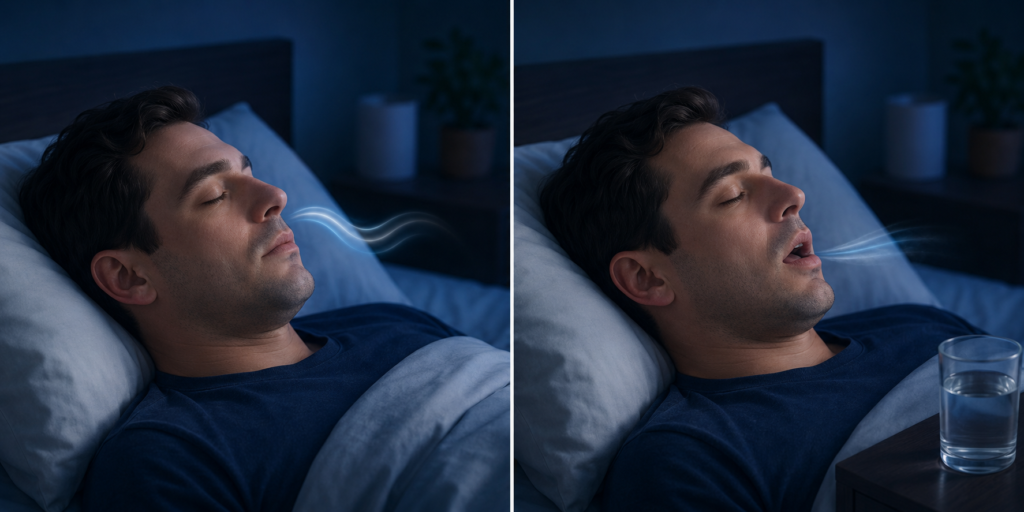
Breathing through the mouth allows air to pass repeatedly over moist oral tissues. That can leave the lips, mouth, and throat feeling dry by morning. You may be more likely to sleep with your mouth open if your nose is blocked by a cold, allergies, sinus symptoms, or another nasal problem.
Clues include waking with a dry throat, a partner noticing that your mouth stays open, or dryness that is worst first thing in the morning and eases after drinking water. Mouth breathing can explain the symptom, but it does not explain why the mouth is open. Persistent nasal blockage deserves assessment.
3. Dry Bedroom Air
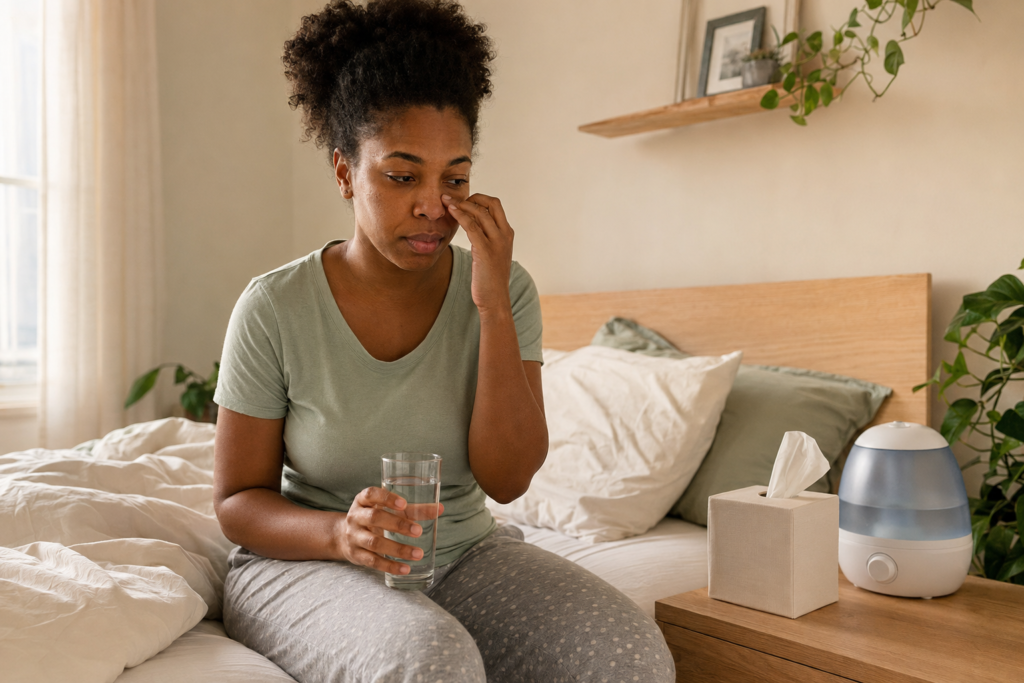
Air conditioning, indoor heating, seasonal weather, or low humidity may make overnight dryness more noticeable. This is especially likely when the symptom changes with the room, season, or use of heating and cooling. Dry air may also worsen irritation when you already breathe through your mouth.
4. Medicine Side Effects
Many prescription and over-the-counter medicines can reduce saliva or make the mouth feel dry. Examples can include some medicines used for allergies, depression, anxiety, high blood pressure, pain, bladder symptoms, and other conditions. The exact effect depends on the medicine and the person.
If the dryness began after you started a medicine or changed a dose, write down the timing and speak with a doctor or pharmacist. Do not stop or change a prescribed medicine on your own. A professional may be able to review the dose, timing, alternatives, or ways to protect your mouth.
5. Alcohol, Tobacco, and Some Drinks
Alcohol and tobacco can worsen dry-mouth symptoms. Drinks containing caffeine may also make dryness more noticeable in some people. Rather than assuming one item is the cause, observe whether symptoms are worse after evening alcohol, smoking, vaping, or a high intake of caffeinated drinks.
6. Snoring or Possible Sleep Apnea
Dry mouth is one recognized symptom of sleep apnea, but dry mouth alone cannot diagnose it. The concern becomes stronger when morning dryness appears with loud habitual snoring, breathing pauses witnessed by another person, gasping or choking during sleep, morning headaches, frequent nighttime urination, unrefreshing sleep, or significant daytime sleepiness.
If several of these clues fit, arrange a medical assessment. A healthcare professional may ask about your sleep and may recommend a sleep study. Treating the sleep problem is more useful than repeatedly treating the dry sensation without addressing its cause. If tiredness remains a major symptom despite sleeping, read why you may feel tired all the time.
7. CPAP-Related Dryness
Positive airway pressure therapy for sleep apnea can sometimes cause a dry mouth or nose, particularly when there is air leakage, mouth breathing, congestion, or insufficient humidification. Do not abandon prescribed therapy because of dryness. Tell your sleep-care provider; mask fit, humidification, or other parts of the setup may need adjustment.
8. A Condition That Affects Saliva or Fluid Balance
Dryness that continues through the day may have a cause beyond the bedroom. Sjögren’s disease, for example, is an autoimmune condition whose main symptoms include dry eyes and dry mouth. Diabetes and some other illnesses can also be associated with dry mouth. Head-and-neck radiation and some cancer treatments may affect the salivary glands.
These conditions are not the most likely explanation for every dry morning. They become more relevant when dryness is persistent, severe, accompanied by other symptoms, or not explained by hydration, breathing, the environment, or medicines.
Pattern Clues That Can Help You Describe the Problem
This table is not a self-diagnosis tool. It can help you notice useful details before speaking with a healthcare professional.
| Pattern you notice | A possibility to discuss |
|---|---|
| Dry only on waking and better after water | Mouth breathing, nasal blockage, dry air, or mild dehydration |
| Dryness began after a new medicine or dose change | A medicine side effect |
| Loud snoring, gasping, witnessed pauses, morning headache, or daytime sleepiness | A sleep-related breathing problem |
| Dry mouth plus persistent dry or gritty eyes | Sjögren’s disease or another cause of widespread dryness |
| Dry mouth with marked thirst, frequent urination, or unexplained weight change | A blood-sugar or fluid-balance problem |
| Cracked lips, mouth sores, trouble swallowing, repeated cavities, or oral infection | Ongoing saliva reduction needing dental or medical care |
| Dry mouth with dark urine and reduced urination | Dehydration or another cause of fluid loss |
Keeping a short seven-day note can be surprisingly helpful. Record when the dryness occurs, how long it lasts, whether your nose is blocked, what you drank in the evening, any medicines taken, sleep clues reported by a partner, and symptoms such as dry eyes or frequent urination.
What May Help Safely at Home?
Low-risk steps can ease mild symptoms while you observe the pattern:
- Hydrate steadily during the day. Sip water regularly instead of trying to correct the entire day’s intake just before sleep. If a clinician has told you to restrict fluids because of a heart, kidney, or other condition, follow that individualized advice.
- Keep water nearby. Small sips can ease discomfort when you wake, although water alone will not correct an underlying cause of persistent dryness.
- Add humidity if the room is dry. A clean humidifier may help. Follow its cleaning instructions because poorly maintained devices can collect germs or mold.
- Pay attention to nasal blockage. Persistent congestion, allergies, or difficulty breathing through the nose may need medical review. Avoid starting long-term decongestant treatment without appropriate advice.
- Review medicines with a professional. Bring a complete list of prescription medicines, over-the-counter products, and supplements to a doctor, dentist, or pharmacist. Do not stop prescribed treatment by yourself.
- Protect your teeth and mouth. Brush twice daily with fluoride toothpaste, clean between the teeth, and attend regular dental checks. A dentist can suggest an appropriate alcohol-free rinse, saliva substitute, gel, or other dry-mouth product if needed.
- Stimulate saliva while awake. Sugar-free gum or sugar-free candy may help some people produce more saliva. Do not use gum or candy while sleeping because of choking risk.
- Limit personal triggers. Reducing tobacco, evening alcohol, and drinks that clearly worsen your dryness may help.
When to Make a Routine Appointment
Book a medical or dental appointment if:
- You wake with a dry mouth most mornings
- Dryness continues during the day
- Symptoms are getting worse or have no clear explanation
- You have trouble tasting, chewing, speaking, or swallowing
- You develop mouth sores, a burning mouth, repeated oral infections, persistent bad breath, or new dental decay
- You also have dry eyes, swollen salivary glands, joint symptoms, marked thirst, frequent urination, or unexplained weight change
- A medicine may be contributing
- You snore loudly, gasp during sleep, stop breathing during sleep, wake with headaches, or struggle with daytime sleepiness
A dentist is particularly helpful when the main effects are in the mouth or teeth. A primary-care clinician can assess hydration, medicines, nasal symptoms, sleep clues, and possible underlying conditions. Depending on the pattern, you may be referred to a sleep clinician, ear-nose-and-throat specialist, rheumatologist, or another professional.
When to Seek Urgent Help
Dry mouth by itself is rarely an emergency. Contact local emergency services or seek urgent medical help if it occurs with:
- Difficulty breathing or swallowing
- Sudden swelling of the lips, tongue, face, or throat
- Confusion, fainting, extreme weakness, or very little urine after significant fluid loss
- Repeated vomiting with an inability to keep fluids down
- In a person with diabetes, deep or rapid breathing, fruity-smelling breath, vomiting, abdominal pain, or reduced alertness
These combinations may indicate a serious allergic reaction, severe dehydration, or another urgent problem. Do not wait for a dry-mouth remedy to work.
What a Healthcare Professional May Ask or Check
The evaluation usually begins with the pattern. You may be asked:
- Is the dryness limited to mornings or present all day?
- Did it begin after a medicine change?
- Do you snore, gasp, wake often, or feel very sleepy during the day?
- Are your eyes, nose, or skin unusually dry?
- Have thirst, urination, weight, or appetite changed?
- Have you had dental decay, mouth sores, oral thrush, or trouble swallowing?
- Have you received radiation or other treatment involving the head and neck?
The clinician or dentist may examine your mouth and teeth, review medicines, and look for signs of reduced saliva. Testing is guided by the history and might include blood or urine tests, an assessment of saliva production, or a sleep evaluation. Not everyone needs every test.
Frequently Asked Questions
Is Waking Up With Dry Mouth a Sign of Diabetes?
It can occur in people with diabetes, but dry mouth alone does not show that someone has diabetes. Frequent urination, marked thirst, unexplained weight change, blurred vision, or fatigue make a blood-sugar check more relevant. A healthcare professional can advise on testing.
Can Sleep Apnea Cause Dry Mouth in the Morning?
Dry mouth is a recognized sleep-apnea symptom, often in the setting of mouth breathing. It becomes more meaningful when it comes with loud snoring, gasping, witnessed breathing pauses, morning headaches, unrefreshing sleep, or daytime sleepiness. Diagnosis requires a proper sleep assessment, not the dry-mouth symptom alone.
Why Does Water Help Only for a Short Time?
Water moistens the mouth but may not address reduced saliva, mouth breathing, medicine effects, or a sleep-related problem. If dryness returns repeatedly despite adequate hydration, look for the pattern and arrange an assessment rather than continually treating only the sensation.
How Long Is Too Long to Keep Waking With a Dry Mouth?
There is no single cutoff that fits everyone. An occasional dry morning with an obvious explanation is different from symptoms present most mornings, continuing through the day, worsening, or affecting eating, speaking, sleep, or dental health. Persistent or troublesome dryness should be discussed with a medical or dental professional.
What Should I Do if CPAP Makes My Mouth Dry?
Continue using prescribed therapy unless your sleep-care provider tells you otherwise, and report the problem. Mask leakage, mouth breathing, nasal congestion, or humidification may need to be reviewed. Your provider can help adjust the setup safely.
Bottom Line
Waking up with dry mouth is commonly linked to dehydration, sleeping with the mouth open, nasal congestion, dry room air, or medicines. The symptom deserves a closer look when it keeps returning, continues during the day, affects your mouth or teeth, or appears with sleep-apnea clues, dry eyes, frequent urination, or other changes.
Start with safe steps such as steady daytime hydration, a clean humidifier when the air is dry, careful oral hygiene, and a review of medicines and nasal symptoms. If the pattern persists, a clinician or dentist can help identify the cause instead of leaving you to guess.
Medical disclaimer: This article is for general educational information only and is not a substitute for professional medical advice, diagnosis, or treatment. Symptoms can have many possible causes. Contact a qualified healthcare professional if you are concerned, especially when symptoms are severe, persistent, new, or worsening. Seek urgent help for emergency warning signs.
Sources
- National Institute of Dental and Craniofacial Research: Dry Mouth
- American Dental Association: Xerostomia (Dry Mouth)
- NHS: Dry Mouth
- National Heart, Lung, and Blood Institute: Sleep Apnea Symptoms
- National Heart, Lung, and Blood Institute: Living With Sleep Apnea
- National Institute of Arthritis and Musculoskeletal and Skin Diseases: Sjögren’s Disease
- MedlinePlus: Dehydration
- MedlinePlus Medical Encyclopedia: Dry Mouth