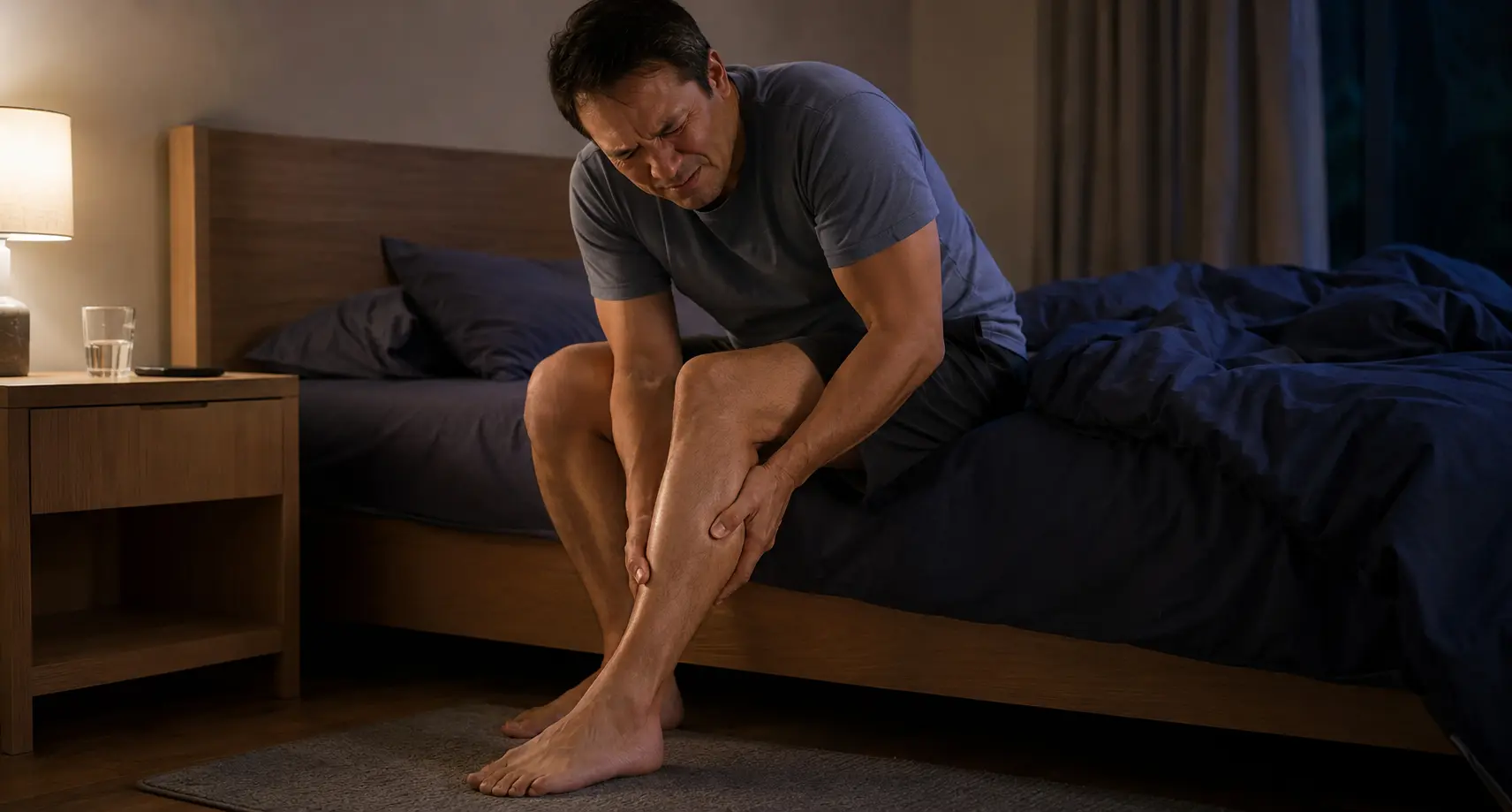
Leg cramps at night are sudden, painful muscle contractions that can wake you from sleep and leave the muscle sore afterward. They most often affect the calf, but the foot or thigh can tighten too. Many episodes have no clear medical cause, especially when they are occasional. Repeated cramps, however, deserve a closer look when they disturb sleep or appear with swelling, numbness, weakness, or other changes.
A true night cramp usually feels like a muscle suddenly locking into a hard knot. That is different from the crawling urge of restless legs syndrome, the burning or tingling of nerve irritation, and the persistent pain and swelling that can accompany a blood clot. Identifying the sensation correctly is the first useful step.
Leg cramps at night: the quick answer
Common patterns include an overworked muscle, long periods of sitting or standing, age-related changes, pregnancy, a medicine effect, or an underlying nerve or circulation problem. Dehydration may contribute after heavy sweating or fluid loss, but leg cramps at night are not automatically proof of low magnesium, potassium, or another electrolyte.
- During a cramp: gently stretch the affected muscle, change position, and massage it if comfortable.
- Book an appointment: if cramps are frequent, worsening, disturbing sleep, or accompanied by numbness or weakness.
- Get urgent help: for one-sided swelling, warmth and redness, or for leg symptoms with chest pain, breathing difficulty, coughing blood, or fainting.
What does a true nighttime leg cramp feel like?
A muscle cramp is an involuntary contraction: the muscle tightens suddenly and cannot immediately relax. According to MedlinePlus, cramps are often painful but usually temporary. Night cramps commonly involve the calf, foot, or thigh.
During leg cramps at night, you may be able to feel or see a firm knot in the muscle. The sharpest pain may last seconds or several minutes, followed by tenderness. If the main symptom is tingling, burning, crawling, or a need to keep moving rather than a hard painful contraction, another explanation may fit better.
7 possible causes and clues behind leg cramps at night
1. No specific cause can be found
Many nighttime cramps are idiopathic, meaning no single disease or deficiency explains them. Nerves and muscles may become more likely to fire abnormally during rest, and susceptibility tends to increase with age. An occasional calf cramp that settles with stretching and has no other symptoms is often less concerning.
That uncertainty can be frustrating, but it prevents a common mistake: assuming every episode means a mineral deficiency. Even when leg cramps at night have no identifiable cause, tracking their frequency and pattern can reveal whether they are changing.
2. Your muscles worked harder than usual
A new workout, long walk, physically demanding job, prolonged standing, or unusually intense activity may leave a muscle fatigued. The cramp can appear hours later, after you have gone to bed. This pattern becomes more plausible when the cramp follows a clear increase in activity and the same muscle feels tired or tender.
Build activity gradually and allow recovery after unusually demanding exercise. Repeated leg cramps at night should not simply be blamed on exercise if they continue on rest days or come with weakness, numbness, swelling, or skin changes.
3. The leg stayed in one position for too long
Long periods of sitting, standing, or keeping the feet pointed downward may leave the calf in a shortened position. Some people notice cramps after travel, desk work, or sleeping with heavy bedding that holds the toes down. Position is more likely to matter when changing posture or gently stretching the calf brings relief.
Regular movement breaks during the day and a gentle calf stretch before bed may be worth trying. Avoid forceful stretching, bouncing, or pushing through sharp pain, particularly if an injury may be present.
4. Pregnancy or age-related changes increase susceptibility
Night cramps become more common with age and are also frequently reported during pregnancy. Changes in circulation, activity, muscle loading, and sleep position may all contribute, so there is not always one simple explanation.
Pregnant people should mention repeated leg cramps at night during routine prenatal care. One-sided swelling, warmth, redness, or persistent tenderness should not be dismissed as an ordinary pregnancy cramp because pregnancy also increases the risk of blood clots.
5. A medicine or health condition may be contributing
Some medicines have been associated with muscle cramping, although the link is not equally strong for every drug. Cramps can also occur alongside conditions affecting nerves, blood flow, the spine, liver, kidneys, or metabolism. Having cramps does not prove that one of these conditions is present.
Look at timing. Did leg cramps at night begin after starting a medicine, changing a dose, becoming ill, or developing other symptoms? Bring a complete medicine and supplement list to a clinician or pharmacist. Do not stop prescribed treatment on your own.
6. The sensation may come from nerves or blood flow instead
Nerve symptoms are often described as burning, electric, prickling, or numb rather than as a brief hard muscle knot. If the feet burn after you lie down, compare that pattern with our guide to burning feet at night. Repeated pins and needles in the feet or wider numbness in the hands and feet also makes a nerve-related evaluation more relevant.
Blood-flow problems can create different patterns. Pain from peripheral artery disease classically appears with walking or exertion and improves with rest, although symptoms vary. A foot that is repeatedly cold, pale, blue, painful, or slow to heal deserves attention; our cold feet at night guide explains related circulation clues.
Sudden swelling, warmth, redness, and persistent tenderness in one leg are not typical leg cramps at night. The CDC blood-clot guidance identifies these as possible signs of deep vein thrombosis, which requires prompt medical assessment.
7. Fluid loss may matter, but minerals are not the whole story
Dehydration can contribute to muscle cramps in some settings, especially after heavy sweating, vomiting, diarrhea, fever, or inadequate fluid intake. Yet evidence does not support treating every nighttime cramp as dehydration or electrolyte deficiency.
Thirst, a dry mouth, reduced urination, and concentrated urine make fluid loss more plausible. Our article on what dark urine may mean explains why dark yellow urine can accompany dehydration and why brown or cola-colored urine can need urgent attention.
Do not take large amounts of magnesium, potassium, salt, or other supplements solely because you have leg cramps at night. Supplements can interact with medicines, and some are unsafe when kidney function is reduced. A clinician can decide whether symptoms, medicines, diet, or test results justify supplementation.

Leg cramps, restless legs, or nerve symptoms?
Because leg cramps at night can be confused with other sensations, compare what you feel with the patterns below.
| Pattern | Typical description | Useful next step |
|---|---|---|
| Muscle cramp | Sudden painful tightening or hard knot, often in one calf or foot | Gentle stretch; track frequency and other symptoms |
| Restless legs syndrome | Strong urge to move with crawling, pulling, or uncomfortable sensations during rest | Discuss recurring sleep disruption with a clinician |
| Nerve-related symptoms | Burning, tingling, numbness, electric pain, or reduced feeling | Seek assessment if persistent, spreading, or linked with weakness |
| Possible blood clot | Persistent one-sided pain or tenderness with swelling, warmth, or redness | Get prompt medical assessment |
The National Institute of Neurological Disorders and Stroke describes restless legs syndrome as an irresistible urge to move, usually triggered by rest and temporarily relieved by movement. That differs from leg cramps at night, where a specific muscle contracts painfully and feels hard.
What to do during leg cramps at night
If the episode feels like an ordinary muscle cramp and there was no injury:
- Stop any movement that increases the pain.
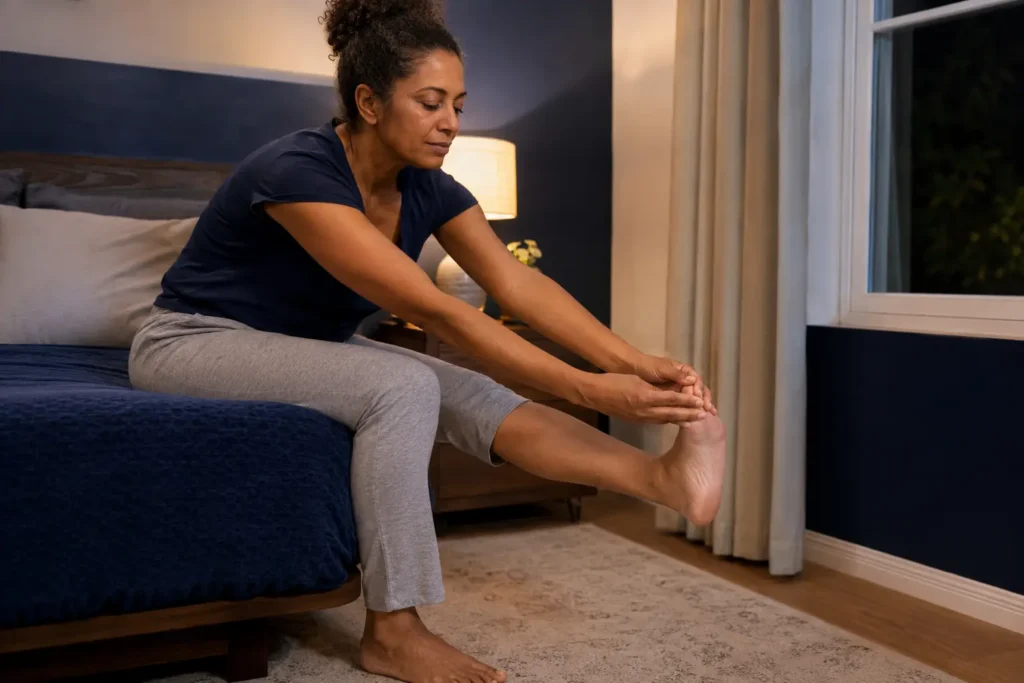
- For a calf cramp, straighten the knee gently and pull the toes toward the shin.
- Massage the tight muscle if touch feels comfortable.
- Stand and walk carefully if you feel steady and it reduces the cramp.
- Use gentle warmth while the muscle is tight or a wrapped cold pack afterward if it remains sore.
The NHS leg-cramp guidance recommends stretching and massaging the affected muscle. A pain reliever will not stop an active cramp immediately because it takes time to work. Avoid aggressive massage when one leg is swollen, warm, red, or unusually tender.
What may help prevent repeated cramps
To reduce leg cramps at night, start with low-risk habits that address positioning, muscle fatigue, and genuine fluid loss.
- Try a gentle calf stretch before bed and after long periods of sitting.
- Increase exercise gradually rather than making sudden large changes.
- Drink normally through the day, especially after sweating or illness, unless you have been told to restrict fluids.
- Use movement breaks during long journeys or desk work.
- Notice whether heavy bedding keeps the feet pointed downward.
- Keep a diary of cramp nights, activity, fluid loss, medicines, and accompanying symptoms.
- Ask for a medicine review if the timing suggests a new prescription or dose change.
There is no single prevention method that works for everyone with leg cramps at night. Test low-risk changes one at a time so you can tell what actually helps.
Do not self-treat night cramps with quinine
Quinine has been used historically for nighttime cramps, but it can cause serious adverse reactions. The U.S. Food and Drug Administration warns that quinine products marketed for leg cramps have been associated with dangerous reactions, including abnormal heart rhythms and kidney-related complications.
Do not use quinine-containing medicine or tonic products as a treatment for leg cramps at night without specific medical advice. “Natural” supplements are not automatically safer, either.
When to book a medical appointment
Arrange an appointment if leg cramps at night:
- happen frequently or are becoming more severe;
- regularly disturb sleep or daytime functioning;
- last unusually long or do not improve with gentle movement;
- come with numbness, burning, swelling, skin changes, or persistent pain;
- are accompanied by muscle weakness, shrinking muscles, balance trouble, or falls;
- began after a medicine change;
- occur alongside kidney, liver, nerve, circulation, or metabolic illness.
A clinician may examine circulation, pulses, sensation, strength, reflexes, joints, and the spine. Blood or urine tests are not automatically required for every cramp, but they may be appropriate when the history suggests a metabolic, kidney, medicine-related, or electrolyte problem.
Urgent warning signs that are not ordinary cramps
Seek prompt medical care for persistent one-sided leg pain with swelling, warmth, redness, or discoloration. These symptoms can occur with a deep vein thrombosis and cannot be safely confirmed or excluded at home.
Contact local emergency services immediately if leg symptoms occur with:
- sudden difficulty breathing;
- chest pain, especially pain that worsens with a deep breath or cough;
- coughing up blood;
- a rapid or irregular heartbeat with faintness;
- collapse or loss of consciousness.
Also seek urgent care for severe continuing pain after an injury, a cold pale limb, rapidly worsening weakness, loss of bladder or bowel control with leg symptoms, or cramps after suspected toxin exposure. These patterns should not be managed as routine leg cramps at night.
Frequently asked questions
Why do my calves cramp while I am sleeping?
The exact cause is often unclear. Muscle fatigue, age, pregnancy, prolonged positioning, medicines, and some nerve or circulation conditions can contribute. The pattern before, during, and after the cramp is more informative than the time alone.
Does low magnesium cause leg cramps at night?
Low magnesium can affect muscles, but leg cramps at night do not prove that your magnesium level is low. Evidence for routine magnesium supplements is mixed. Ask a healthcare professional before supplementing, especially if you have kidney disease or take regular medicine.
Will eating bananas prevent nighttime cramps?
Bananas are nutritious and contain potassium, but eating one does not treat every cause of nighttime cramping. A balanced diet is sensible; repeatedly taking extra potassium without evidence of deficiency can be unsafe.
Are night leg cramps the same as restless legs syndrome?
No. A cramp is a sudden painful muscle contraction. Restless legs syndrome causes a strong urge to move the legs with uncomfortable crawling, pulling, aching, or tingling sensations that are temporarily relieved by movement.
Can a blood clot feel like a leg cramp?
A blood clot can cause leg pain or tenderness, but swelling, warmth, redness, discoloration, or persistent one-sided symptoms are more concerning than a brief muscle knot that releases. Seek prompt assessment when those signs appear.
When should I worry about leg cramps at night?
Get the symptom assessed when cramps are frequent, worsening, disrupting sleep, or accompanied by numbness, weakness, swelling, skin changes, or persistent pain. Breathing difficulty, chest pain, coughing blood, or fainting requires emergency help.
Bottom line
Leg cramps at night are often brief and may have no identifiable cause. Gentle stretching can help during an ordinary cramp, while a consistent routine and symptom diary may reduce repeat episodes or clarify triggers. Do not assume every cramp is dehydration or low magnesium. Repeated cramps with nerve symptoms, weakness, swelling, or circulation changes need medical assessment, and possible blood-clot or breathing symptoms need urgent care.
This article is for general educational information only and is not a substitute for professional medical advice, diagnosis, or treatment. Symptoms can have many possible causes. Contact a qualified healthcare professional if you are concerned, especially when symptoms are severe, persistent, new, or worsening. Seek urgent help for emergency warning signs.
Sources
- MedlinePlus: Muscle Cramps
- NHS: Leg Cramps
- National Institute of Neurological Disorders and Stroke: Restless Legs Syndrome
- Centers for Disease Control and Prevention: Blood Clots
- U.S. Food and Drug Administration: Unapproved Drugs and Patient Harm
- American Academy of Family Physicians: Nocturnal Leg Cramps