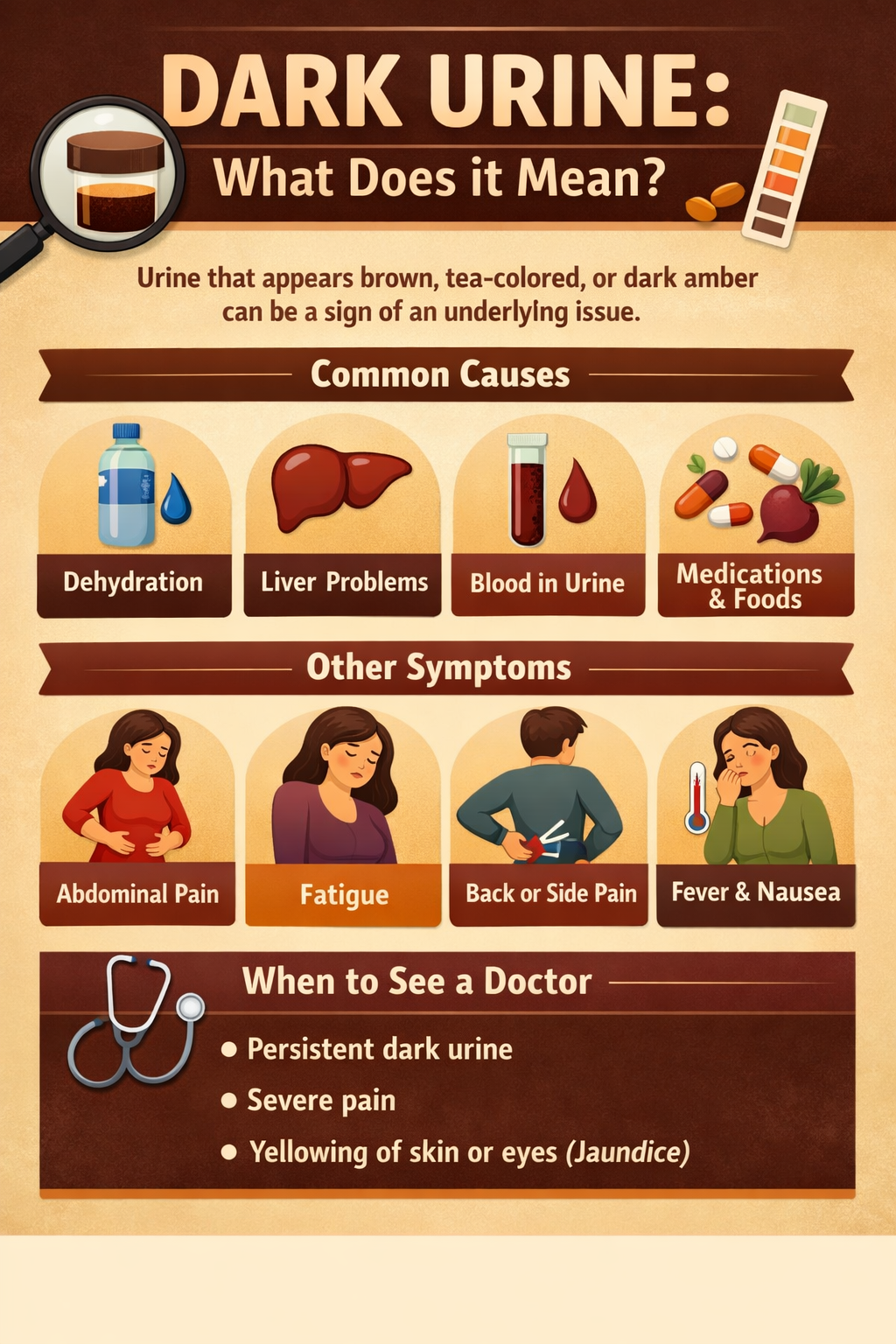
Dark urine meaning can range from something simple like dehydration to a more serious problem that needs medical attention. Many people notice darker urine after not drinking enough water, but dark urine can also happen with liver or bile duct problems, certain medicines, foods, or muscle breakdown.
That is why it helps to look at the exact color, how long it lasts, and whether you have any other symptoms at the same time. Here is what dark urine can mean and when you should worry.
What Does Dark Urine Mean?
Normal urine is usually pale yellow to medium yellow. Dark urine is urine that looks much darker than your usual color, including dark yellow, amber, tea-colored, brown, or cola-colored urine.
Dark yellow or amber urine often means the urine is concentrated, usually because of dehydration. Tea-colored, brown, or cola-colored urine can be more concerning and may be linked to bilirubin in the urine, liver or bile duct problems, severe dehydration, blood, or muscle breakdown.
1. Dehydration Is One of the Most Common Reasons for Dark Urine
Not drinking enough water is one of the most common causes of dark urine. When you are dehydrated, your urine becomes more concentrated, which can make it look dark yellow or amber.
If your urine is dark and you also feel thirsty, have a dry mouth, feel tired, or are urinating less often, dehydration becomes a likely explanation. In many cases, the urine gets lighter again after you drink enough fluids.
2. Liver or Bile Duct Problems Can Cause Dark Urine
Dark brown or tea-colored urine can sometimes be a sign of a liver or bile duct problem. This can happen when bilirubin builds up and passes into the urine.
If dark urine happens with yellowing of the skin or eyes, pale or clay-colored stools, nausea, itching, fatigue, or pain in the upper abdomen, it becomes more important to rule out liver-related causes.
3. Medicines or Supplements May Change Urine Color
Some medicines and supplements can make urine appear darker than usual. This does not always mean something dangerous is happening, but it is worth checking the medicine information or asking a doctor or pharmacist if the change is new or unexpected.
If dark urine starts soon after beginning a medicine, increasing a dose, or taking a new supplement, that timing matters.
4. Foods and Vitamins Can Sometimes Darken Urine
Some foods, food dyes, and vitamins can temporarily change urine color. In these cases, the change is often short-lived and goes away once the food or supplement is no longer affecting the body.
If the color change is mild, temporary, and not accompanied by any other symptoms, it may be less concerning. But urine that stays very dark should still be checked.
5. Muscle Breakdown Can Cause Tea-Colored or Cola-Colored Urine
Very dark urine can sometimes happen with a serious condition called rhabdomyolysis, which means muscle tissue is breaking down. This can happen after very intense exercise, crush injuries, overheating, or other serious problems affecting muscle tissue.
If dark urine appears after heavy exercise, injury, overheating, or major muscle pain and weakness, it needs urgent medical attention.
6. Less Common Conditions Can Also Cause Dark Urine
Rare inherited or metabolic conditions can sometimes cause unusually dark urine. These are much less common than dehydration or liver-related causes, but persistent or unusual urine color that does not improve still deserves medical evaluation.
What Different Shades of Dark Urine Might Mean
Dark yellow or amber urine is often linked to dehydration. Brown, tea-colored, or cola-colored urine is more concerning and may suggest bilirubin in the urine, severe dehydration, liver problems, blood, or muscle breakdown.
The darker the urine and the more unusual the shade, the more important it is to pay attention to other symptoms that appear with it.
When Should You Worry About Dark Urine?
You should pay closer attention if dark urine does not improve after drinking fluids, lasts more than a day or two, becomes brown or cola-colored, or appears with other symptoms.
Concerning symptoms include yellow eyes or skin, pale stools, severe muscle pain, nausea, vomiting, fever, weakness, abdominal pain, or a major drop in how much you urinate.
When to See a Doctor
You should see a doctor if your urine stays dark even after you drink more water, or if it comes with jaundice, pale stools, abdominal pain, weakness, fever, vomiting, or other unusual symptoms.
A doctor may suggest a urinalysis and, depending on your symptoms, may also check for bilirubin, liver problems, blood in the urine, or other underlying causes.
What Can Help?
If dehydration is the cause, drinking more fluids may help the urine return to its normal color. But if the change is caused by liver disease, bile duct problems, muscle breakdown, blood, or another medical issue, treatment depends on the real cause, not just on drinking more water.
Frequently Asked Questions
Does dark urine always mean dehydration?
No. Dehydration is very common, but dark urine can also be caused by liver or bile duct problems, medicines, foods, blood, or muscle breakdown.
What does brown urine mean?
Brown urine can sometimes mean liver-related problems, severe dehydration, blood in the urine, or muscle breakdown, depending on the exact shade and the symptoms that come with it.
How long should dark urine last before I worry?
If it does not get better after drinking enough fluids, lasts more than a day or two, or comes with symptoms like jaundice, pain, vomiting, weakness, or pale stools, it should be checked.
Bottom Line
Dark urine meaning is not always the same. Sometimes it is just a sign that you need more water. But dark urine can also point to liver or bile duct problems, medicines, muscle breakdown, or other health issues.
If the color change lasts, is very dark, or comes with other symptoms, it is safest to get it checked rather than guess.
Related Articles
- 8 Causes of Sudden Dizziness You Should Never Ignore
- 6 High Blood Pressure Signs You Should Never Ignore
- 10 Iron Deficiency Symptoms in Women You Should Never Ignore
- 9 Fingernail Changes You Should Never Ignore
Medical Disclaimer: This article is for educational and informational purposes only and is not a substitute for professional medical advice, diagnosis, or treatment. Symptoms can have many possible causes. Always consult a qualified healthcare professional if you have concerns about your health, especially if symptoms are severe, persistent, or worsening.
When to Seek Medical Help: Seek prompt medical attention if dark urine does not improve with fluids, lasts more than a day or two, becomes brown or cola-colored, or comes with yellow eyes or skin, pale stools, severe muscle pain, vomiting, weakness, fever, abdominal pain, or reduced urination.
Reviewed for clarity: March 31, 2026
Last updated: March 31, 2026
Sources: