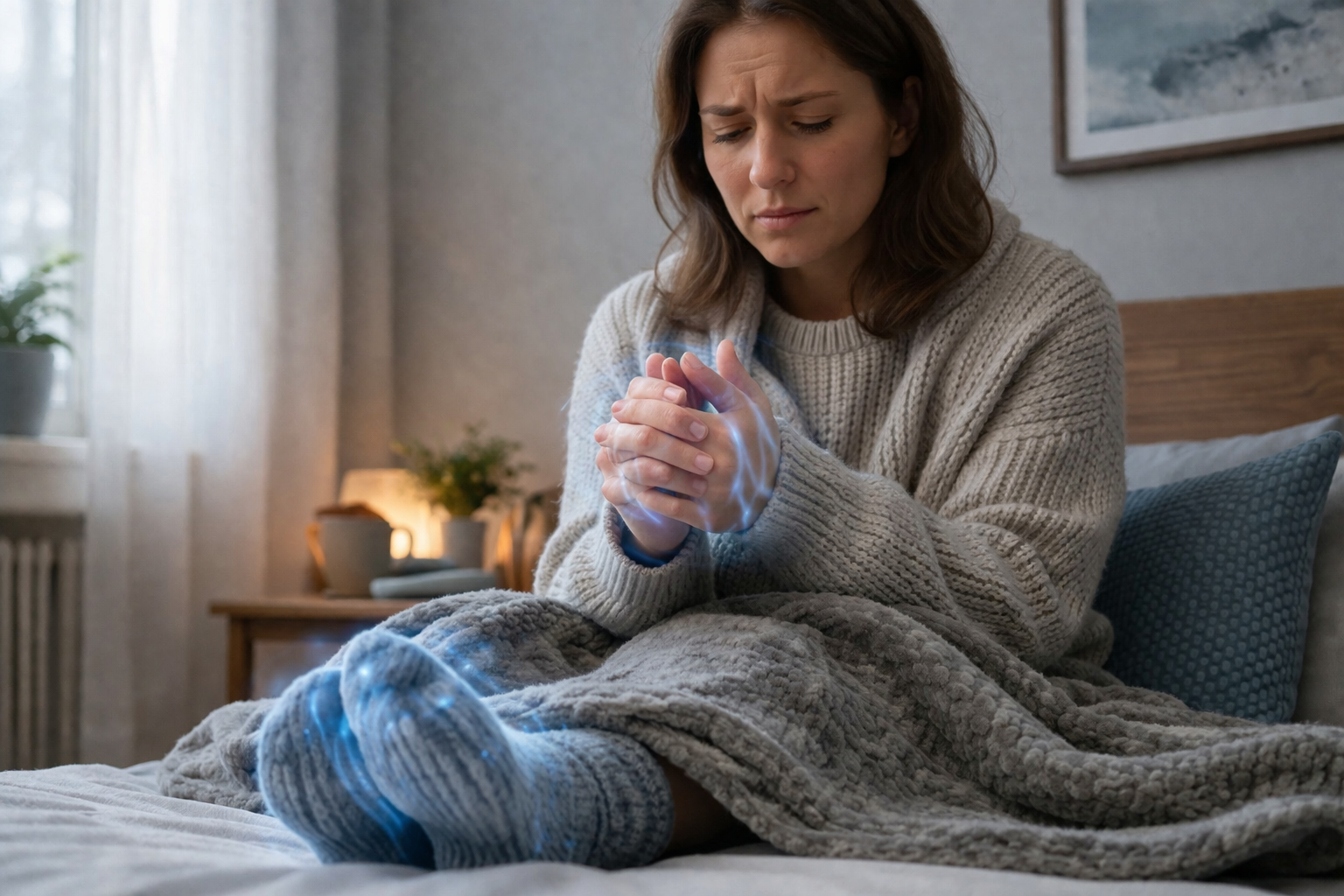
Cold Hands and Feet but No Fever: Common Causes and When to Worry
Cold hands and feet but no fever can feel confusing because most people associate feeling cold with being ill. In reality, cold hands and feet but no fever are often not about infection at all. They may reflect how your body handles temperature, how blood is flowing to your fingers and toes, or whether another issue such as Raynaud phenomenon, anaemia or thyroid dysfunction is making you feel colder than usual. Cleveland Clinic notes that cold hands are often not dangerous on their own, but they may sometimes be linked to circulation-related issues or other conditions. NHLBI also lists cold hands and feet among symptoms of iron-deficiency anaemia. If you also notice numbness, read Numb Hands and Feet Causes: 9 Warning Signs You Should Not Ignore.
The most useful clue is the pattern. Someone who has always had cold hands and feet and otherwise feels well is different from someone whose hands and feet suddenly become cold along with dizziness, weakness, numbness, colour changes, pain or ulcers. Out-of-proportion coldness or coldness paired with other symptoms is more worth checking.
What does cold hands and feet but no fever mean?
This symptom usually means your hands and feet feel colder than the rest of your body even though you do not have the temperature rise that defines a fever. For many people, this is because extremities lose heat more easily and receive less warm blood flow when the body is trying to conserve heat. It may also happen because small blood vessels narrow too much in response to cold or stress, as happens in Raynaud phenomenon.
That is why “no fever” matters. It pushes the reader away from infection as the main explanation and towards circulation, blood vessel spasm, red blood cell problems or endocrine causes. Cleveland Clinic notes that people can feel unusually cold for reasons such as anaemia or hypothyroidism even without fever.
Naturally Cold Extremities vs Raynaud vs Anaemia-Like Coldness
| Pattern | More Likely Explanation | What It Usually Feels Like |
|---|---|---|
| Cold hands and feet have always been normal for you | Naturally colder extremities | Hands and feet feel chilly but warm up fairly easily and there are no major other symptoms |
| Episodes are triggered by cold or stress and fingers or toes change colour | Raynaud phenomenon | Cold, numb, white, blue, grey or red fingers and toes that come and go |
| Coldness comes with tiredness, dizziness or pale skin | Anaemia-like coldness | Cold hands and feet plus fatigue, weakness, light-headedness or shortness of breath |
| Coldness is new, persistent or out of proportion | Worth medical assessment | May point to circulation, thyroid, blood or nerve-related causes |
Common causes of cold hands and feet but no fever
1. Naturally colder extremities
Some people simply tend to have cold hands and feet more often than others. If this has always been typical for you, it warms up fairly easily, and there are no other symptoms, it may be more of a personal temperature pattern than a disease. Cleveland Clinic notes that some people just have cold hands and feet more often, and it is not always a sign of a serious problem.
2. Raynaud phenomenon
Raynaud phenomenon is one of the classic explanations for cold fingers and toes. It happens when blood vessels narrow too much in response to cold temperatures or emotional stress. The affected areas can feel cold, numb or painful and may turn white, blue, grey or red as blood flow changes. This is especially likely if the episodes come and go rather than staying constant.
A few clues that fit Raynaud:
- Fingers or toes change colour
- Episodes are triggered by cold or stress
- Numbness or prickling happens as they warm up
- The pattern is intermittent rather than constant
3. Anaemia
Anaemia means your body does not have enough healthy red blood cells or enough haemoglobin to carry oxygen effectively. The NHLBI lists cold hands and feet as a symptom of iron-deficiency anaemia, along with fatigue, dizziness or light-headedness and pale skin. That makes anaemia one of the most practical causes to consider when cold hands and feet come with tiredness or breathlessness.
This becomes more likely if you also notice:
- Unusual tiredness
- Dizziness or light-headedness
- Pale skin
- Shortness of breath
- Headaches
4. Thyroid problems
Hypothyroidism, or an underactive thyroid, can make people feel cold more easily because metabolism slows down. Cleveland Clinic notes that hypothyroidism is one reason some people feel unusually cold. When cold hands and feet happen with fatigue, dry skin, constipation, weight gain or sluggishness, thyroid disease becomes more worth considering.
5. Poor circulation
Poor circulation cold hands and feet is a phrase many readers worry about, and sometimes that concern is justified. Circulation problems can reduce warm blood flow to the extremities, making them feel persistently cold. Cleveland Clinic notes that cold hands may sometimes reflect how blood is travelling through the body, even though cold hands are not usually a direct symptom of heart disease or anaemia.
Poor circulation becomes more concerning if you also have:
- Pain while walking
- One side worse than the other
- Numbness
- Skin colour changes
- Slow-healing wounds
- Swelling or weakness
6. Low body weight, low calorie intake or being in a cold environment
A simple environmental explanation still matters. If you are in a cool room, under-eating, or have little insulating body fat, your hands and feet may feel cold more often. This is less likely to be medically significant when the coldness is mild, predictable and improves quickly with warmth.
7. Nerve-related problems
While numbness and burning are more classic neuropathy symptoms, nerve issues can also change how temperature is felt in the hands and feet. Mayo Clinic notes that numbness can happen when nerves are irritated, damaged or compressed, and diabetes can damage longer nerve fibres that go to the feet. If coldness comes with tingling, numbness or burning, a nerve-related cause moves higher on the list.
8. Smoking or medicine effects
Smoking narrows blood vessels and can worsen cold extremities. Some medicines can also affect circulation or make you feel colder. This is not always the cause, but it can worsen an existing tendency towards cold hands and feet.
9. Anxiety or stress-related vessel narrowing
Stress can cause blood vessels to constrict temporarily, especially in people prone to Raynaud episodes. If your fingers or toes get colder during stress and then improve afterwards, that pattern is useful.
Symptoms that matter along with always cold hands and feet
Coldness alone is one thing. Coldness plus other symptoms changes the picture.
Pay attention to:
- Fatigue or unusual weakness
- Dizziness or light-headedness
- Pale skin
- Numbness or tingling
- Fingers or toes turning white, blue, grey or red
- Pain when warming up
- One hand or foot being much colder than the other
- Sores, cracks or wounds that heal slowly
Both Hands and Feet Cold vs One-Sided Coldness
Both Hands and Feet Feel Cold
More likely patterns:
- Naturally cold extremities
- Anaemia
- Thyroid problems
- General circulation or temperature regulation issues
One Hand or One Foot Is Much Colder
More likely patterns:
- Local circulation problem
- Blood vessel narrowing
- Injury or local nerve issue
- More urgent pattern if sudden or painful
Why this matters: both-sided coldness is more likely to suggest a broader body-wide issue, while one-sided coldness is more concerning for a local circulation or injury-related problem.
If colour changes are the main feature, Raynaud becomes more likely. If fatigue and dizziness dominate, anaemia or thyroid problems become more relevant. If numbness or burning shows up too, a neuropathy-type problem deserves more attention.
Risk factors for cold extremities causes
A medical cause becomes more likely if you:
- Have a history of anaemia
- Have thyroid disease
- Smoke
- Have diabetes
- Notice Raynaud-type colour changes
- Have autoimmune disease
- Are older
- Have significant fatigue, dizziness or weakness alongside the coldness
If your site already has related content, useful internal cluster links here include Cold Feet at Night: Causes, Red Flags and When to Seek Help, Numb Hands and Feet Causes: 9 Warning Signs You Should Not Ignore, Iron Deficiency Symptoms in Women, and Can High Blood Pressure Cause Dizziness? 7 Important Facts to Know.
When Coldness Is Probably Mild vs Worth Checking
Probably less worrying
- You have always tended to have cold hands and feet
- The coldness improves quickly with warmth
- There is no pain, numbness or colour change
- It happens mostly in cool environments
- You otherwise feel well
Worth checking
- The coldness is new or getting worse
- You also feel tired, weak or dizzy
- Your fingers or toes change colour
- One hand or foot is much colder than the other
- You have numbness, tingling, pain or sores
- The coldness feels out of proportion to the room temperature
When cold hands and feet but no fever may be serious
Book a medical appointment if:
- Your hands and feet are always cold and it is new for you
- The coldness feels out of proportion to the environment
- One side is much worse than the other
- You also feel tired, dizzy or weak
- Your fingers or toes change colour often
- You have numbness, tingling or pain
- You have cracks, sores or wounds that heal slowly
Cleveland Clinic specifically advises paying attention when feeling cold comes with fatigue, tingling or weakness, as those are signs there may be more going on than simply a low room temperature.
When to seek urgent medical help
Seek urgent medical care right away if:
- One hand or foot suddenly becomes very cold, pale, blue or painful
- You lose movement or feeling suddenly
- A wound looks blackened or infected
- Coldness appears after a major injury
- Symptoms come with facial drooping, arm weakness, speech trouble or confusion
Those patterns are not typical of simple cold extremities and should not be treated as routine.
How doctors work out the cause
A clinician will usually start with the pattern:
- Is it both hands and feet or just one area?
- Do the fingers or toes change colour?
- Is the coldness constant or episode-based?
- Do you also have fatigue, dizziness, weakness or numbness?
- Do you have a history of anaemia, thyroid disease, Raynaud symptoms or diabetes?
Depending on the situation, assessment may include blood tests for anaemia or thyroid function, pulse and circulation checks, and a neurological exam if tingling or numbness is present. That combination is often what separates harmless cold sensitivity from an underlying medical cause.
Treatment and management options
Treatment depends on the cause.
If the problem is mostly environmental or mild
- Keep your whole body warm, not just your hands and feet
- Wear socks or gloves when needed
- Avoid sitting still too long in a cold room
If Raynaud seems likely
- Avoid cold triggers where possible
- Manage stress
- Stop smoking if relevant
- Warm the hands and feet gently rather than using very hot heat
If anaemia, thyroid problems or another medical condition is involved
The underlying problem needs attention rather than repeatedly trying to “warm up” the symptom alone.
Self-care and prevention
These steps are sensible for many people:
- Keep your core body warm
- Avoid nicotine
- Move around regularly
- Notice whether stress or cold triggers colour changes
- Do not ignore persistent fatigue, dizziness or numbness
- Get checked if the pattern is worsening or new
The key practical point is this: cold hands and feet but no fever are often not about infection. They are more about circulation, blood vessel response, red blood cell health or metabolism. That makes the rest of the symptom pattern more important than the temperature alone.
Cold Hands and Feet Symptom Tracker
You can save or print this tracker and use it for a few days before a medical appointment.
| Time | Trigger | Colour Change? | Dizziness? | Fatigue? | What Helped? |
|---|---|---|---|---|---|
Tip: tracking when the coldness starts, what seems to trigger it, whether colour change happens, and whether dizziness or fatigue comes with it can help a clinician work out whether the pattern sounds more like Raynaud, anaemia, thyroid-related coldness or simple cold sensitivity.
Related Symptom Guides You May Also Find Helpful
Cold hands and feet but no fever can overlap with cold feet, numbness, anaemia-like symptoms, thyroid-related coldness and dizziness. These related guides can help readers understand the wider picture:
- Cold Feet at Night: Causes, Red Flags and When to Seek Help
- Numb Hands and Feet Causes: 9 Warning Signs You Should Not Ignore
- Iron Deficiency Symptoms in Women
- Can High Blood Pressure Cause Dizziness? 7 Important Facts to Know
- What Causes Sudden Dizziness and How To Stop It Fast
If you are building topical authority, this article fits well inside a cluster around cold extremities, anaemia, thyroid-type symptoms, dizziness and body warning signs linked to circulation and nerve sensation.
Bottom line
Cold hands and feet but no fever are often explained by naturally colder extremities, environmental factors or blood vessel responses such as Raynaud phenomenon. But if you always have cold hands and feet, or the coldness comes with fatigue, dizziness, numbness, colour changes, pain or wounds, it is worth getting checked. The most useful clue is not simply whether you feel cold, but how often it happens, how out of proportion it feels, and what else comes with it.
This article is for informational purposes only and is not a substitute for personal medical advice.
Key Takeaways
- Cold hands and feet but no fever often point away from infection and towards circulation, blood vessel spasm, anaemia, thyroid problems or body-temperature regulation.
- Raynaud phenomenon often causes cold, numb fingers or toes with colour changes triggered by cold or stress.
- Iron-deficiency anaemia can cause cold hands and feet along with fatigue, dizziness and pale skin.
- Hypothyroidism is another recognised reason people may feel unusually cold overall, including in their extremities.
- Sudden one-sided coldness, severe pain, colour change or sudden loss of feeling needs urgent medical attention.
Frequently Asked Questions
Why do I have cold hands and feet but no fever?
This often happens because of body-temperature regulation, blood vessel narrowing, poorer blood flow to the extremities, anaemia, thyroid problems or simply naturally cold hands and feet. Fever is not usually part of these patterns.
Can anaemia cause cold hands and feet?
Yes. NHLBI lists cold hands and feet among symptoms of iron-deficiency anaemia, especially when it is more than mild.
Does thyroid disease make hands and feet cold?
It can. Cleveland Clinic notes hypothyroidism as one reason some people feel unusually cold.
What is the difference between Raynaud phenomenon and poor circulation?
Raynaud usually causes episode-based vessel spasms triggered by cold or stress and often includes colour changes. Poor circulation is more of a broader blood-flow problem and may feel more constant or come with wounds, numbness or one-sided symptoms.
Is it normal to always have cold hands and feet?
Sometimes, yes, especially if it has always been that way and there are no other symptoms. It becomes more important to investigate when it is new, worsening or linked with fatigue, dizziness, numbness, pain or colour changes.
When should I worry about cold extremities?
You should worry more when the coldness is out of proportion, persistent, one-sided, painful, or comes with colour changes, sores, numbness, weakness or dizziness.
Can poor circulation cause cold hands and feet without fever?
Yes. Circulation problems can reduce warm blood flow to extremities without causing a fever.
1 thought on “Cold Hands and Feet but No Fever: 9 Common Causes and When to Worry”