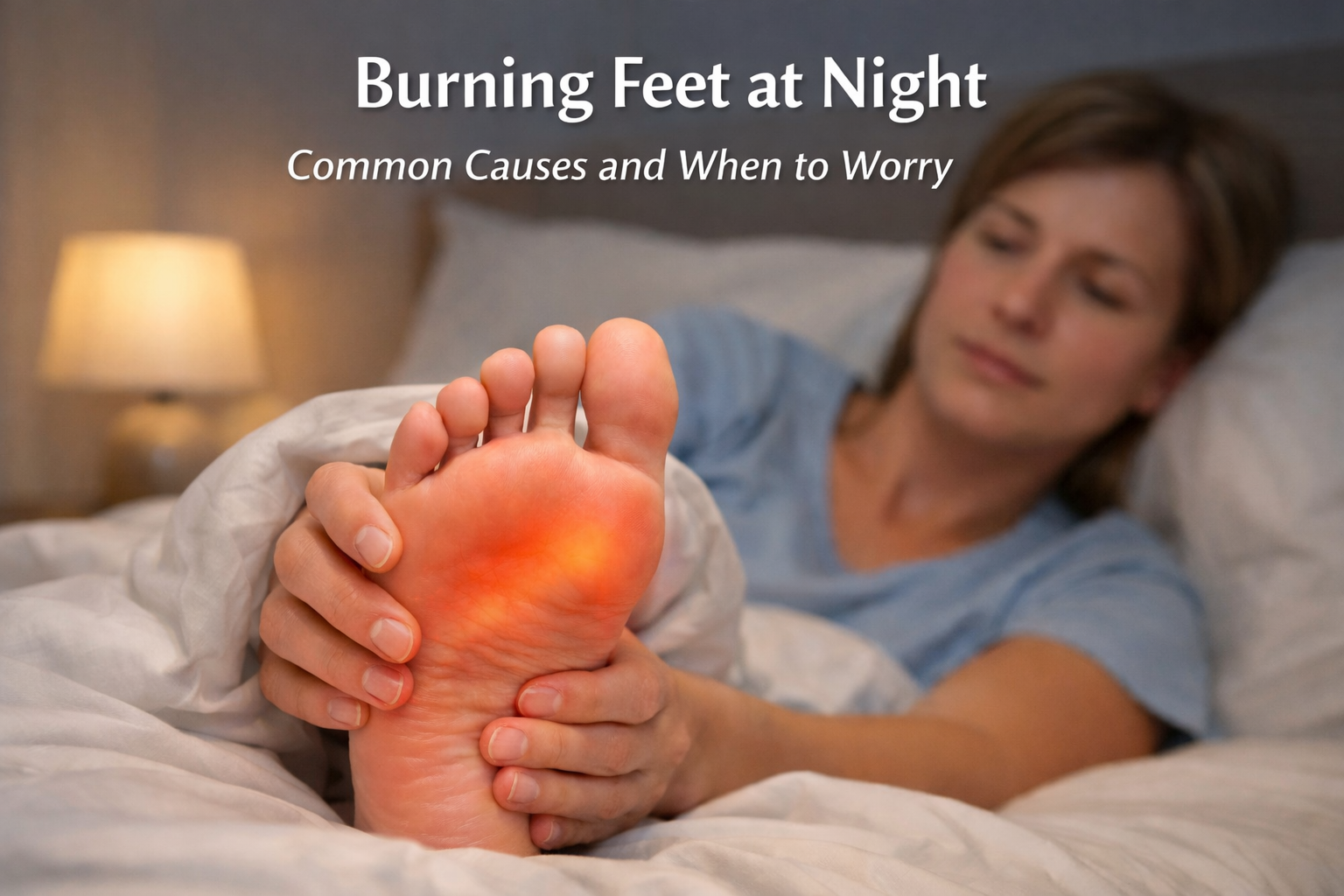
Burning Feet at Night: Common Causes and When to Worry
Burning feet at night can be uncomfortable enough to keep you awake and anxious, especially when the soles feel hot, prickly or painfully sensitive once you get into bed. Sometimes the cause is fairly simple, such as tired feet, a skin irritation or tight footwear earlier in the day. But burning feet at night are often linked to nerve damage, also called peripheral neuropathy. If the sensation keeps coming back, affects both feet, or comes with tingling, numbness, weakness or balance trouble, it is worth paying closer attention. If you also notice numbness elsewhere, read Numb Hands and Feet Causes: 9 Warning Signs You Should Not Ignore.
The pattern matters more than the symptom name alone. Mild burning soles at night after a long day are not the same as repeated tingling and burning feet at night that disturb sleep and gradually spread upward. The NIDDK notes that neuropathy symptoms in the feet are often worse at night, which is one reason this symptom gets noticed in bed.
What does burning feet at night mean?
Burning feet at night describes a sensation of heat, burning, prickling or painful sensitivity in the feet, especially the soles. Some people describe hot feet at night. Others say it feels like their feet are on fire, buzzing, stinging or overly sensitive to bedsheets.
This symptom can happen for different reasons. A temporary irritation may cause it in some people, but a nerve-related cause becomes more likely when the burning is repeated, affects both feet, or is linked with numbness, tingling or reduced ability to feel temperature changes. MedlinePlus notes that tingling or burning in the arms and legs may be an early sign of nerve damage and often starts in the toes and feet.
Tired Overheated Feet vs Neuropathy-Like Burning
| Pattern | More Likely Explanation | What It Usually Feels Like |
|---|---|---|
| Happens after a long day, standing, tight shoes, or heat | Tired or overheated feet | Warm, sore, or mildly burning feet that settle with rest |
| Improves fairly quickly after resting or removing footwear | Usually less worrying | Feels more like heat or tiredness than sharp burning pain |
| Happens often, especially at night | Neuropathy or another underlying problem | Repeated burning, prickling, tingling, or painful heat in the soles |
| Affects both feet or disturbs sleep regularly | Peripheral neuropathy becomes more likely | More persistent symptoms, sometimes with numbness or reduced feeling |
| Comes with tingling, numbness, weakness, or foot sores | Worth medical assessment | Suggests more than simple tired or overheated feet |
Common causes of burning feet at night
1. Peripheral neuropathy
This is one of the most important causes to know about. Peripheral neuropathy happens when peripheral nerves are damaged. Mayo Clinic lists burning pain, prickling, tingling, numbness and weakness among common symptoms. The NHS also notes that sensory neuropathy can cause a burning or sharp pain, usually in the feet, alongside numbness and pins and needles.
A few clues that neuropathy may be involved:
- Symptoms are worse at night
- Both feet are affected
- There is tingling, numbness or reduced feeling
- Pain feels burning, stabbing or electric
- Balance feels worse than usual
2. Diabetes and diabetic neuropathy
Diabetes is one of the most common causes of neuropathy. The NIDDK says diabetic peripheral neuropathy may cause burning or tingling, like pins and needles, in the feet and that symptoms are often worse at night. It also warns that reduced feeling in the feet raises the risk of unnoticed blisters, cuts and burns.
If you have diabetes or prediabetes, feet burning at night causes should not be brushed off as simple overheating. They may reflect nerve damage developing over time.
3. Vitamin deficiency and metabolic causes
Burning feet are not always caused by diabetes. Mayo Clinic lists certain B vitamin deficiencies among possible causes of burning feet, and the NHS notes that neuropathy can be caused by other health conditions in addition to diabetes. Metabolic problems and nutritional deficiency are also listed by MedlinePlus as causes of metabolic neuropathy.
4. Alcohol use and toxin exposure
Mayo Clinic lists chronic alcohol use and toxin exposure among recognised causes of peripheral neuropathy and burning feet. These are not the most common explanation for every reader, but they matter because they can damage nerves gradually.
5. Medicine-related neuropathy
Some medicines can damage nerves and lead to burning, tingling, weakness or balance problems. This becomes more important if the timing of symptoms changed after starting or increasing a medication that can affect nerve health.
6. Tarsal tunnel syndrome or local nerve compression
Sometimes the problem is more local than widespread. MedlinePlus describes tarsal tunnel syndrome as an unusual form of peripheral neuropathy caused by compression of the tibial nerve near the inner ankle. This can produce burning, tingling or numb sensations in the foot.
This becomes more plausible if:
- One foot is more affected than the other
- The burning stays localised
- There is ankle or inner-foot pain
- Symptoms are linked to local pressure or irritation
7. Skin irritation, infection or overuse
Mayo Clinic notes that fatigue or a skin infection can temporarily cause burning or inflamed feet. This is usually a better fit when the burning feels more surface-level, the skin looks irritated, or the problem clearly follows friction, rash, fungal infection or overuse rather than numbness or tingling.
8. Small fibre nerve problems
MedlinePlus Genetics describes small fibre neuropathy as a condition that often begins in the feet or hands and can cause stabbing or burning pain and abnormal sensations such as tingling. Some people notice symptoms more during rest or at night.
Why do my feet burn at night more than during the day?
There are a few reasons this symptom often feels worse at night. First, some neuropathic symptoms truly intensify after dark. The NIDDK specifically says symptoms of peripheral neuropathy are often worse at night. Second, once you are in bed, there are fewer distractions, so burning soles at night become harder to ignore. Third, bedsheets and light contact may feel unexpectedly painful when nerves are irritated, which the NHS describes as pain from something that should not be painful at all.
Symptoms that matter along with hot feet at night
Burning alone is one thing. Burning plus other symptoms gives a clearer picture.
Watch for:
- Tingling or pins and needles
- Numbness or reduced feeling
- Sharp, stabbing or electric pain
- Pain from light touch or bedsheets
- Weakness in the feet or ankles
- Poor balance or clumsiness
- Sores, blisters or burns you did not feel happen
- Symptoms spreading up the legs
Both Feet vs One Foot: A Quick Burning Guide
Both Feet Burning
More likely patterns:
- Peripheral neuropathy
- Diabetes-related nerve problems
- Vitamin deficiency
- Metabolic or medicine-related causes
One Foot Burning
More likely patterns:
- Local nerve compression
- Tarsal tunnel syndrome
- Skin irritation or friction
- Local injury or pressure
Why this matters: burning in both feet is more likely to suggest a wider nerve-related problem, while one-foot burning is more likely to come from a local issue. The full symptom pattern still matters most.
If you also have tingling, a relevant companion read is Pins and Needles in Feet at Night: Common Causes and When to Worry. If you are noticing coldness rather than heat, another useful cluster article is Cold Feet at Night: Causes, Red Flags and When to Seek Help.
Risk factors for feet burning at night causes
A medical cause becomes more likely if you have:
- Diabetes or prediabetes
- Older age
- Chronic alcohol use
- Certain medicines
- Vitamin deficiency
- Kidney disease
- Thyroid or other metabolic conditions
- Toxin exposure
- Balance trouble or loss of feeling in the feet
A one-off warm, tired feeling in the feet after a long day is less concerning than symptoms that recur often and are paired with numbness or reduced sensation.
When Burning Is Probably Mild vs Worth Checking
Probably less worrying
- Happens after standing a lot, tight shoes, or heat
- Feels mild and settles with rest
- Does not keep happening repeatedly
- There is no numbness, weakness, or reduced feeling
- It does not affect sleep often
Worth checking
- It happens often or most nights
- Both feet are affected repeatedly
- You also have tingling, numbness, or pain
- You feel weak or unsteady
- You have diabetes or foot sores
- Symptoms are spreading upward into the legs
When burning feet at night may be serious
Book a medical appointment if:
- The burning keeps returning
- It is affecting sleep regularly
- Both feet are involved often
- You also have tingling, numbness or reduced feeling
- You feel weak or unsteady
- You have diabetes
- You notice foot sores, blisters or burns
- Symptoms are spreading upward into the legs
Mayo Clinic advises seeing a clinician if burning feet continue or become more intense, and especially if you have diabetes.
When to seek urgent medical help
Get urgent medical care right away if:
- Burning is followed by rapidly worsening weakness
- You suddenly lose movement or feeling in a foot or leg
- Symptoms spread quickly upward
- A foot wound looks infected, darkened or you cannot feel it at all
- Symptoms begin suddenly after a major injury
- Burning comes with facial drooping, arm weakness, speech trouble or confusion
These are not typical patterns of simple tired or overheated feet.
How doctors work out the cause
Doctors usually start with the symptom pattern:
- Is it both feet or one?
- Is it worse at night?
- Is there tingling, numbness, weakness or balance trouble?
- Do you have diabetes or another condition that affects nerves?
- Have you started any new medicines?
- Are there sores, burns or injuries you did not notice before?
Mayo Clinic notes that evaluation for peripheral neuropathy may include blood tests, nerve function tests, electromyography and, in some cases, skin biopsy. The exam also looks at strength, reflexes, sensation and balance.
Treatment and management options
Treatment depends on the cause.
If the issue is temporary irritation or overuse
- Remove the trigger
- Let the feet rest
- Check for rash, friction or surface irritation
If the issue is neuropathy
- The underlying cause needs attention
- Blood sugar control matters in diabetes
- Medicines may need review
- Numb or painful feet need protection from injury and burns
The NHS notes that neuropathy treatment focuses on treating any underlying cause or symptoms, and NIDDK emphasises foot protection in diabetes because reduced sensation makes injury easier to miss.
Self-care and prevention
A few sensible steps can help:
- Avoid long periods of foot pressure
- Check whether footwear is irritating the feet
- Manage diabetes carefully if you have it
- Inspect your feet regularly if sensation seems reduced
- Avoid heat sources on numb feet, including very hot water bottles or heating pads
- Speak with a clinician if symptoms are persistent, worsening or affecting balance
That heat-safety point matters. The NIDDK warns that people with diabetic nerve damage may burn their feet and not realise it.
Burning Feet at Night Symptom Tracker
You can save or print this tracker and use it for a few days before a medical appointment.
| Time | Duration | Both Feet or One Foot? | Numbness? | Pain or Burning Level? | What Helped? |
|---|---|---|---|---|---|
Tip: tracking when the burning starts, how long it lasts, whether it affects one foot or both, and whether numbness or pain comes with it can make it easier for a clinician to work out whether the pattern sounds local, nerve-related, or diabetes-related.
Related Symptom Guides You May Also Find Helpful
Burning feet at night can overlap with tingling, numbness, cold feet, and diabetes-related foot symptoms. These related guides can help readers understand the wider picture:
- Numb Hands and Feet Causes: 9 Warning Signs You Should Not Ignore
- Pins and Needles in Feet at Night: Common Causes and When to Worry
- Cold Feet at Night: Causes, Red Flags and When to Seek Help
- Can High Blood Pressure Cause Dizziness? 7 Important Facts to Know
- What Causes Sudden Dizziness and How To Stop It Fast
If you are building topical authority, this article fits well inside a cluster around neuropathy, circulation, diabetes foot symptoms, numbness, and balance changes.
Final thought
Burning feet at night are often a nerve-related symptom, not just a comfort problem. A brief episode after overuse or irritation may be relatively minor, but repeated burning soles at night that come with tingling, numbness, weakness, reduced feeling or foot sores deserve proper attention. The most useful clue is the pattern: how often it happens, whether it affects both feet, and what other symptoms come with it.
This article is for informational purposes only and is not a substitute for personal medical advice.
Key Takeaways
- Burning feet at night are often linked to peripheral neuropathy, especially when symptoms are repeated or paired with tingling or numbness.
- Diabetes is one of the most common causes, and diabetic neuropathy symptoms are often worse at night.
- Burning plus reduced feeling matters because it raises the risk of unnoticed burns, blisters and sores.
- Local nerve compression such as tarsal tunnel syndrome can cause more localised burning or tingling in one foot.
- Rapidly worsening weakness, sudden loss of feeling or an infected or blackened foot wound needs urgent medical attention.
Frequently Asked Questions
Why do my feet burn at night more than during the day?
Neuropathy symptoms are often more noticeable or genuinely worse at night. Light contact from bedsheets can also feel painful when nerves are irritated.
Are burning feet at night always caused by diabetes?
No. Diabetes is a common cause, but burning feet can also happen with other types of neuropathy, vitamin deficiency, local nerve compression, skin irritation, alcohol-related nerve damage or certain medicines.
Is hot feet at night the same as burning feet?
Not always. Mild warmth can be harmless, but a true burning sensation is more suggestive of nerve irritation or another medical issue, especially if it is painful or recurrent.
Can burning soles at night happen without numbness?
Yes. Burning, tingling or prickling may happen before obvious numbness develops, especially in early neuropathy.
When should I worry about burning feet at night?
You should take it more seriously if it keeps returning, affects both feet, disturbs sleep, comes with numbness or weakness, or if you have diabetes or foot sores.
Can a trapped nerve cause one burning foot?
Yes. Local nerve compression, including tarsal tunnel syndrome, can cause burning, tingling or numbness in one foot.
What helps if my feet burn at night?
The right treatment depends on the cause. If symptoms keep returning, it is better to look for the underlying problem than to repeatedly self-treat the sensation alone.