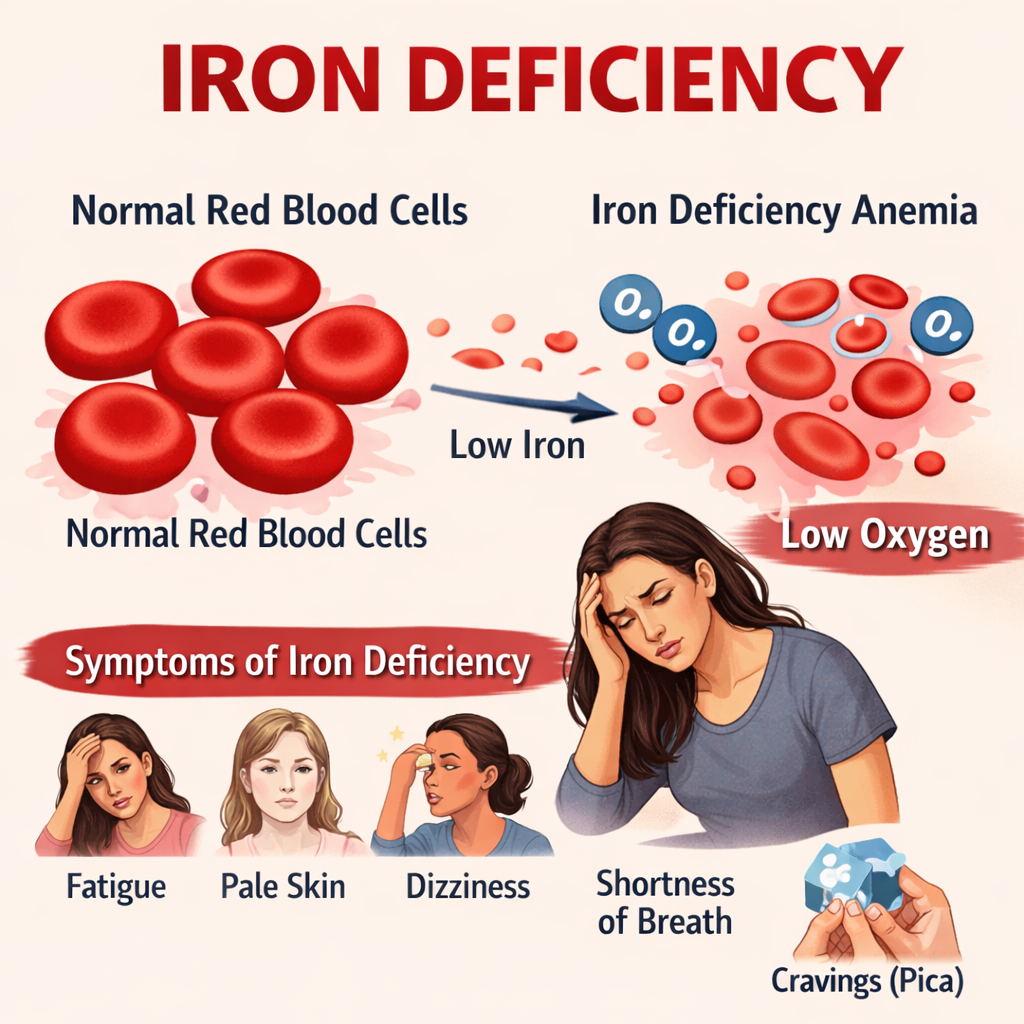
Iron deficiency symptoms often build up slowly, which is why they are so easy to ignore at first. Many people blame stress, a busy schedule, poor sleep, or getting older. But if you have been feeling off for weeks or months and cannot explain why, low iron could be part of the reason.
Iron helps your body make hemoglobin, a protein in red blood cells that carries oxygen from your lungs to the rest of your body. When iron levels drop, your body has a harder time delivering enough oxygen to your organs, muscles, and tissues. That is why iron deficiency symptoms can affect energy, breathing, circulation, skin color, and even cravings.
Here are 7 iron deficiency symptoms you should never ignore.
1. Fatigue Is One of the Most Common Iron Deficiency Symptoms
This is not just ordinary tiredness. People with low iron often feel drained even after sleeping. Everyday tasks can start to feel heavier than usual, and your body may seem to be running on low fuel.
Because this fatigue often develops gradually, many people get used to it and start seeing it as normal. If your exhaustion has been lingering and rest is not helping much, iron deficiency is worth considering.
2. Pale Skin Can Be a Sign of Iron Deficiency
Healthy skin often has some warmth and color because of blood flow under the surface. When iron levels are low and red blood cell production drops, the skin may start to look paler or more washed out than usual.
Some people also notice paleness inside the lower eyelids, gums, or lips. If people keep telling you that you look tired or unwell, and you have noticed other symptoms too, it is worth getting checked.
3. Shortness of Breath During Normal Activity Can Be One of the More Noticeable Iron Deficiency Symptoms
If you are getting out of breath walking quickly, climbing stairs, or carrying ordinary things that never used to bother you, low iron could be part of the picture.
When your blood is not carrying enough oxygen efficiently, your body tries to compensate by breathing faster and making the heart work harder. That can leave you feeling winded much more easily than before.
4. Headaches and Dizziness Can Happen With Iron Deficiency
Your brain is sensitive to changes in oxygen delivery. If iron deficiency affects how much oxygen reaches the brain, headaches and dizziness can happen.
Some people notice frequent headaches without a clear trigger. Others feel dizzy, especially when standing up quickly. If you are reaching for headache medicine more often than usual and cannot explain why, low iron is worth checking.
5. Cold Hands and Feet Can Be Iron Deficiency Symptoms
When oxygen delivery becomes less efficient, the body may prioritize vital organs over the hands and feet. That can leave your extremities feeling cold even when the room temperature seems fine to everyone else.
If your hands and feet are often cold and you also have tiredness, pale skin, or breathlessness, the pattern becomes more meaningful.
6. Brittle Nails and Increased Hair Shedding Can Be Linked to Low Iron
When the body is low on resources, it focuses on the systems most important for survival. Hair and nails are not high on that list, so they can show signs of strain.
You may notice nails that break more easily, become thin, or develop ridges. Some people also notice more hair shedding than usual. In more advanced cases, nails can begin to curve upward in a spoon-like shape, called koilonychia, which deserves medical attention.
7. Craving Non-Food Items Can Be a More Unusual Iron Deficiency Symptom
Some people with iron deficiency develop a condition called pica, which means craving things that are not food. Ice is one of the most commonly reported cravings, but some people may also crave chalk, clay, paper, or dirt.
If this is happening, it should not be brushed off as a strange habit. It is a sign that something may be wrong nutritionally and needs proper medical evaluation.
What Should You Do If These Iron Deficiency Symptoms Sound Familiar?
If several of these symptoms sound familiar, the best next step is to speak with a healthcare professional and ask whether testing is needed. A full blood count and ferritin test are commonly used to help check for iron deficiency and iron deficiency anemia.
It is best not to start iron supplements blindly without knowing your actual levels. Too much iron can also be harmful, so testing first is the safest approach.
Foods That Can Help Support Iron Intake
Iron-rich foods include red meat, poultry, fish, lentils, beans, tofu, spinach, pumpkin seeds, and fortified breakfast cereals. Pairing iron-rich foods with vitamin C sources, such as oranges, tomatoes, bell peppers, or lemon juice, can help improve absorption.
Tea and coffee can reduce how much iron your body absorbs if you drink them with meals, so it may help to leave some time between them and iron-rich foods.
Frequently Asked Questions
What are the first signs of iron deficiency?
Early iron deficiency symptoms often include tiredness, low energy, pale skin, headaches, dizziness, and getting short of breath more easily than usual.
Can iron deficiency cause cold hands and feet?
Yes. Some people with low iron notice that their hands and feet feel cold more often, especially when this happens alongside fatigue or paleness.
Should I take iron supplements if I think I am low?
It is better to get tested first. Iron supplements can help when iron deficiency is confirmed, but taking iron unnecessarily or in excess can be harmful.
Bottom Line
Iron deficiency symptoms are common, easy to miss, and often explained away for too long. Fatigue, pale skin, shortness of breath, headaches, dizziness, cold hands and feet, brittle nails, hair shedding, and unusual cravings can all be clues.
If several of these signs sound familiar, getting checked is the smartest next step. Iron deficiency is common, and with the right diagnosis and treatment, it is often very manageable.
Related Articles
- 8 Causes of Numbness in Hands and Feet You Should Never Ignore
- 9 Fingernail Changes You Should Never Ignore
Medical Disclaimer: This article is for educational and informational purposes only and is not a substitute for professional medical advice, diagnosis, or treatment. Symptoms can have many possible causes. Always consult a qualified healthcare professional if you have concerns about your health, especially if symptoms are severe, persistent, or worsening.
When to Seek Medical Help: Seek medical advice if you have ongoing fatigue, pale skin, shortness of breath, dizziness, frequent headaches, unusual cravings, or worsening weakness. Seek urgent care if you have chest pain, severe shortness of breath, fainting, or rapidly worsening symptoms.
Reviewed for clarity: March 31, 2026
Last updated: March 31, 2026
Sources:
2 thoughts on “7 Warning Signs Your Body Is Lacking Iron”