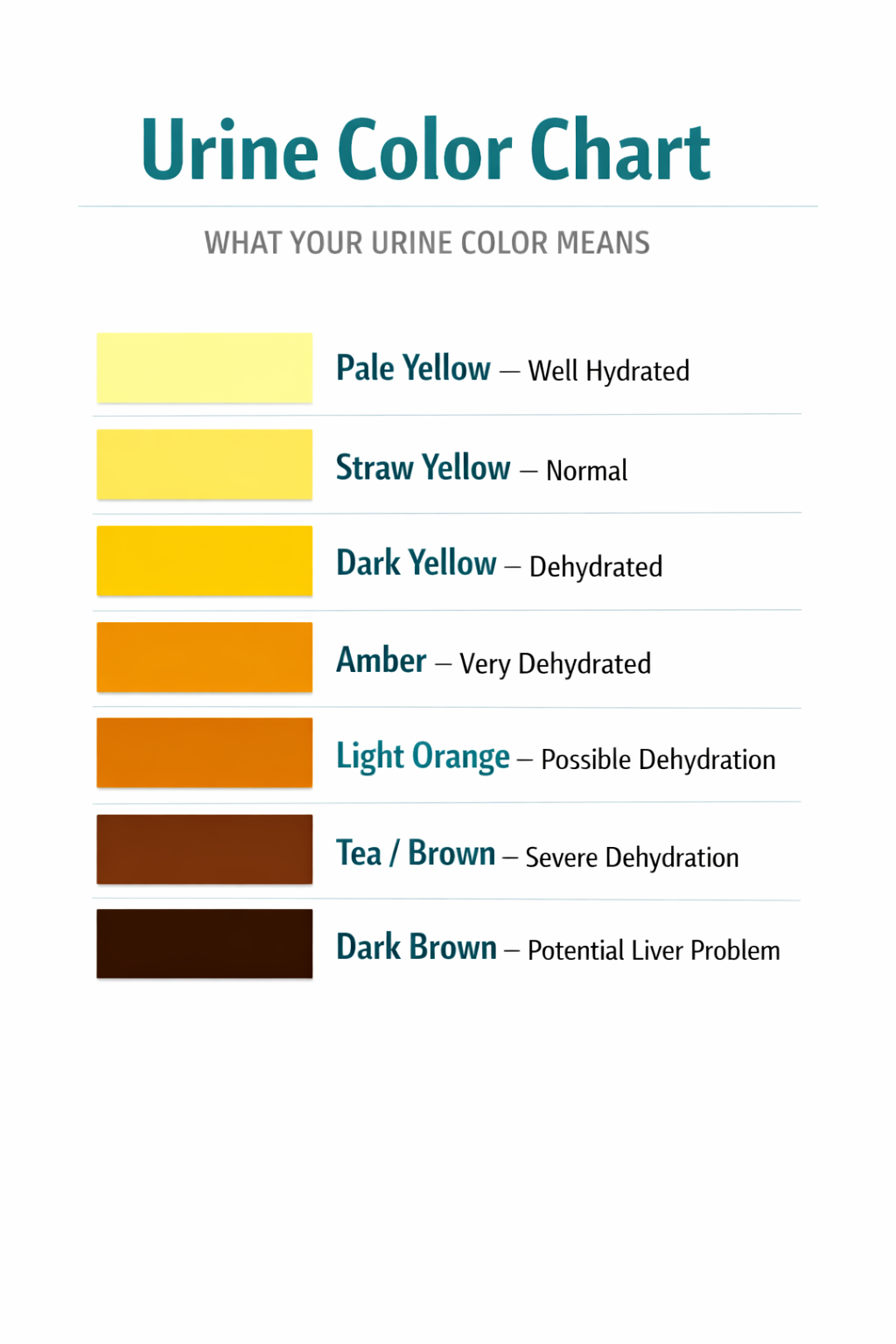
Urine color can reveal a surprising amount about your hydration, diet, medications, and sometimes your overall health. In many cases, a change in urine color is harmless and temporary. But some changes can be a warning sign that something needs medical attention.
Normal urine is usually pale yellow to medium yellow. That yellow color comes from a pigment called urochrome, which is produced as the body breaks down old red blood cells. The more diluted your urine is, the lighter it usually appears. The more concentrated it is, the darker it may look.
Here is what different urine colors may mean and when you should pay closer attention.
Normal Urine Color: Pale Yellow to Medium Yellow
This is usually considered the normal and healthy range. Pale yellow to medium yellow urine often means you are reasonably well hydrated and your kidneys are doing their job properly.
If your urine stays in this range most of the time and you are not having any unusual symptoms, it is generally a reassuring sign.
Clear Urine Color: What It May Mean
Completely clear urine can happen after drinking a lot of water, and it is not always a problem. But if your urine is always colorless, it may mean you are drinking more fluids than your body needs.
If you also notice excessive thirst or frequent urination, it is worth mentioning to a doctor. Those symptoms can sometimes point to an underlying issue that needs checking.
Dark Yellow or Amber Urine
Dark yellow urine often means your urine is more concentrated, usually because you need more fluids. This commonly happens in the morning, after exercise, during hot weather, or whenever you have not been drinking enough water.
If your urine stays dark throughout the day even when you are drinking enough fluids, or if it is accompanied by pain, fever, or other symptoms, it is a good idea to get it checked.
Orange Urine
Orange urine can have several possible causes. It may happen because of dehydration, certain medicines, supplements, or foods. Foods rich in beta-carotene, such as carrots and sweet potatoes, may also affect urine color in some cases.
In some situations, orange urine may be linked to liver or bile-related problems, especially if it appears along with pale stools, yellowing of the skin or eyes, nausea, or itching. If orange urine cannot be explained by food, vitamins, or medication, and it comes with any of those symptoms, seek medical advice promptly.
Pink or Red Urine
Pink or red urine can sometimes be caused by foods such as beets, blackberries, or rhubarb. Certain medicines may also change urine color.
However, pink or red urine can also mean blood is present in the urine. Possible causes include urinary tract infections, kidney stones, bladder problems, prostate enlargement, kidney disease, and in some cases more serious conditions.
If you notice pink or red urine and cannot clearly link it to food or medication, speak with a doctor as soon as possible. Seek prompt medical attention if it appears together with pain, burning, fever, clots, or difficulty urinating.
Brown or Tea-Colored Urine
Brown or tea-colored urine should not be ignored. It can sometimes happen with severe dehydration, but it may also be linked to blood in the urine, liver problems, certain medicines, or muscle breakdown.
If brown urine appears together with pale stools, yellowing of the skin or eyes, severe weakness, or severe muscle pain, seek medical attention promptly.
You may also want to read our related guide on early liver warning signs.
Cloudy Urine
Cloudy urine is not always serious, but it can be a sign of a urinary tract infection, crystals, bacteria, mucus, blood cells, or other urinary issues.
If cloudy urine happens together with burning during urination, fever, bad odor, pelvic pain, or frequent urination, an infection becomes more likely.
If cloudy urine keeps happening or comes with symptoms, a urine test can help find the cause.
Foamy Urine
A small amount of foam can happen occasionally, especially if urine hits the toilet water with force. But persistently foamy urine that appears often may suggest protein in the urine.
Protein in the urine can sometimes be a sign of kidney-related problems. If the foam keeps appearing and does not quickly disappear, it is worth getting checked.
Blue or Green Urine
Blue or green urine is uncommon, but it can happen. It is often linked to medicines, dyes used in medical tests, or certain food colorings.
In rare cases, infection may also contribute to unusual urine color. If you notice blue or green urine and cannot explain it by medication, food dye, or a recent medical procedure, mention it to a healthcare professional.
What Urine Smell Can Tell You
Urine smell can also offer clues. Strong-smelling urine often happens when urine is concentrated due to dehydration. Some foods, especially asparagus, can also change the smell.
A sweet or fruity smell may sometimes be linked to high blood sugar, while foul-smelling urine may happen with some infections. Smell alone cannot diagnose a problem, but unusual odor together with other symptoms deserves attention.
When a Change in Urine Color Is Worth Checking
Not every color change is a cause for alarm. Diet, hydration, supplements, and medications can all affect urine appearance. But if a color change lasts more than a day or two, keeps returning, or appears with pain, fever, yellowing of the skin, swelling, fatigue, or trouble urinating, it should not be ignored.
Paying attention to what is normal for you can make it easier to notice when something changes.
Frequently Asked Questions
Is clear urine healthy?
Clear urine can happen after drinking a lot of water. It is not always a bad sign, but constantly colorless urine may mean you are overhydrated or, in some cases, dealing with another health issue.
Can food change urine color?
Yes. Foods like beets, blackberries, rhubarb, carrots, and some artificial colorings can temporarily change urine color.
When is dark urine serious?
Dark urine is often linked to dehydration, but it can be more serious if it persists despite good fluid intake or appears with symptoms like jaundice, pain, weakness, or pale stools.
Bottom Line
Urine color is one of the easiest body signals to notice, and in many cases it can offer useful clues about hydration and health. Pale yellow is usually normal. Red, brown, orange, cloudy, or persistently foamy urine may deserve more attention depending on the situation.
If something looks unusual and you cannot explain it by food, fluids, or medication, getting medical advice is the safest next step.
Related Articles
Medical Disclaimer: This article is for educational and informational purposes only and is not a substitute for professional medical advice, diagnosis, or treatment. Symptoms can have many possible causes. Always consult a qualified healthcare professional if you have concerns about your health, especially if symptoms are severe, persistent, or worsening.
When to Seek Medical Help: Seek urgent medical attention if you have urine that is red or brown without a clear cause, severe pain, fever, vomiting, yellowing of the eyes or skin, confusion, fainting, difficulty urinating, or any sudden worsening of symptoms.
Reviewed for clarity: March 31, 2026
Last updated: March 31, 2026
Sources:
1 thought on “What Your Urine Color Says About Your Health”