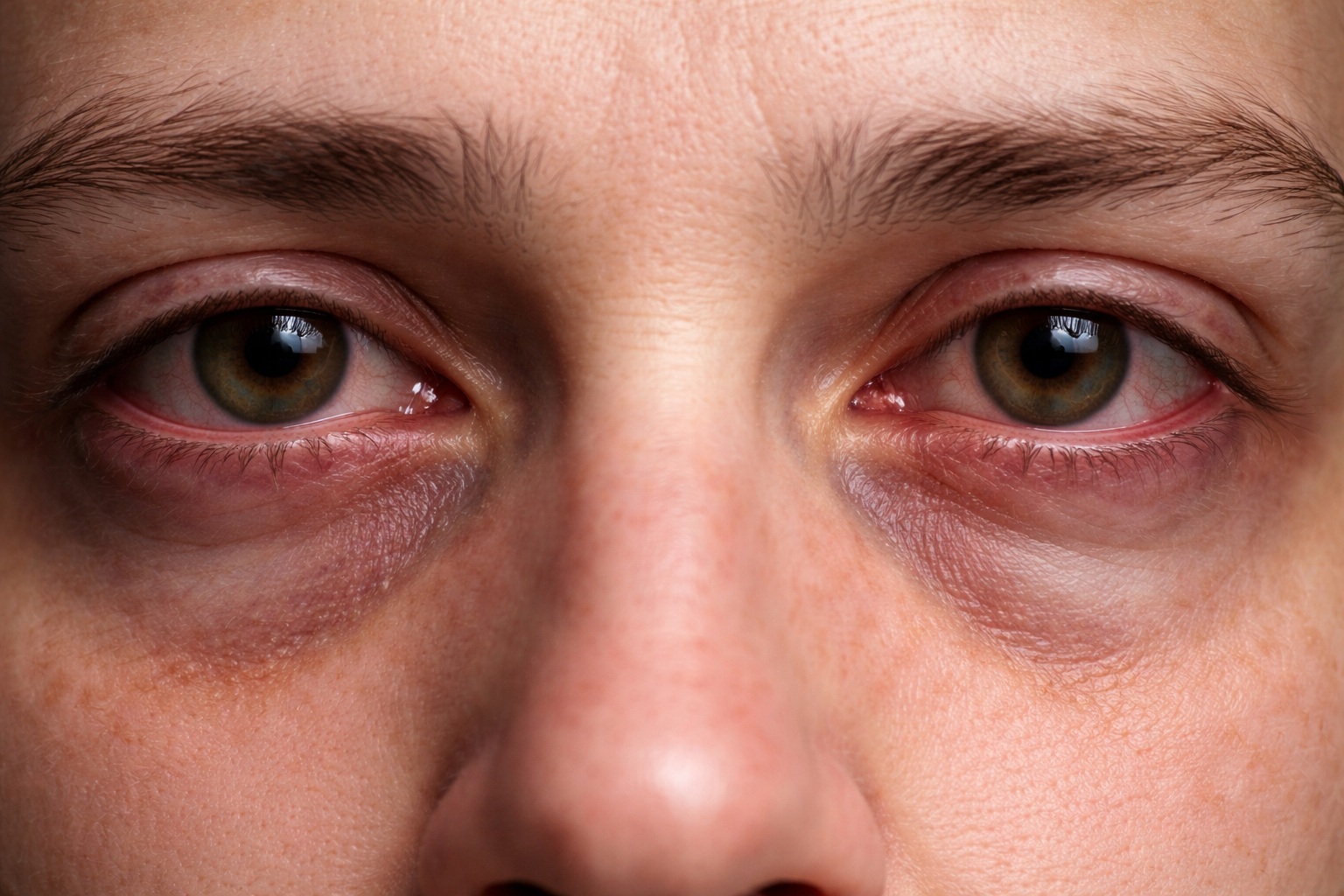
Eye twitching causes are usually harmless, but they can still be frustrating and distracting. One minute your eyelid feels normal, and the next it starts flickering or twitching on its own for no clear reason.
The medical term for this common eyelid twitch is myokymia. In most cases, it is linked to everyday triggers such as lack of sleep, stress, too much caffeine, dry eyes, or eye strain. The good news is that most episodes go away on their own once the trigger is addressed.
Here are 7 common eye twitching causes and when the twitching needs medical attention.
1. Lack of Sleep Is One of the Most Common Eye Twitching Causes
Not getting enough sleep is one of the best-known triggers for eyelid twitching. When your body is tired, your nervous system can become more irritable, and small muscles like the ones in your eyelid may start twitching.
If your eye twitching tends to show up during stressful weeks, late nights, or poor sleep periods, sleep deprivation is a very likely cause.
2. Too Much Caffeine Can Trigger Eye Twitching
Caffeine stimulates the nervous system, which can make muscles more likely to twitch. For some people, coffee, energy drinks, tea, or other caffeinated drinks can make eyelid twitching worse.
If you have been drinking more caffeine than usual, or if your body has become more sensitive to it, try cutting back for several days and see if the twitching improves.
3. Eye Strain and Screen Time Are Common Eye Twitching Causes
Long hours of screen use can tire the muscles around your eyes and reduce how often you blink. That can lead to eye strain, irritation, and twitching.
Using the 20-20-20 rule can help. Every 20 minutes, look at something about 20 feet away for 20 seconds. This gives your eyes a break and may reduce strain-related twitching.
4. Stress Can Cause Eye Twitching
Stress affects the whole nervous system, and one way it can show up is through small muscle twitches. The eyelid is one of the most common places this happens.
Stress-related twitching often gets worse during difficult periods, poor sleep, or times of anxiety. Unfortunately, the twitch itself can also become stressful, which sometimes keeps the cycle going.
5. Dry Eyes Can Be One of the More Overlooked Eye Twitching Causes
Dry, irritated eyes can trigger eyelid twitching. This is especially common in people who spend long hours on screens, wear contact lenses, sit in air-conditioned rooms, or do not blink enough.
If your twitching comes with burning, grittiness, irritation, or light sensitivity, dry eyes may be part of the reason.
6. Alcohol, Smoking, and Certain Medications Can Trigger Twitching
Alcohol and nicotine can affect the nervous system and may make eyelid twitching more likely in some people. Certain medicines can also trigger twitching as a side effect.
If your twitching started after a medication change or tends to worsen after alcohol or smoking, that pattern is worth paying attention to.
7. Low Magnesium or Other Less Common Causes May Sometimes Be Involved
Some people worry that eye twitching means they are low in magnesium. While magnesium plays a role in muscle and nerve function, eye twitching is much more often linked to tiredness, stress, caffeine, or dry eyes than to a nutrient deficiency.
Still, if the twitching is persistent and not explained by the usual lifestyle triggers, a healthcare professional can help decide whether further evaluation is needed.
When Eye Twitching Needs Medical Attention
Most eyelid twitching is harmless and settles within days or a couple of weeks. But you should speak with a doctor if the twitching keeps going and is not improving, especially after trying simple lifestyle changes.
You should also get checked if your eyelid completely closes with each twitch, if the twitching spreads to other parts of your face or body, if your eyelid is drooping, or if your eye is red, swollen, or has discharge.
When to Get Help Promptly
Seek medical advice promptly if eye twitching lasts more than 2 to 3 weeks, affects your vision, makes it hard to open your eye, or comes with facial weakness, stiffness, or other unusual symptoms.
In rare cases, more persistent twitching can be linked to conditions such as blepharospasm or hemifacial spasm, which are different from ordinary eyelid myokymia and may need specific treatment.
What You Can Do Right Now
Start with the most common triggers. Try getting more sleep, cutting back on caffeine, taking regular screen breaks, staying hydrated, and reducing stress where possible.
If your eyes feel dry or irritated, lubricating eye drops may help. If the twitching does not improve after you have addressed the likely causes, book an appointment and describe exactly how long it has been happening and what seems to make it better or worse.
If your twitching comes alongside unusual tiredness or ongoing fatigue, you may also want to read our related guide on why you feel tired all the time.
Frequently Asked Questions
Is eye twitching usually serious?
No. Most eye twitching is harmless and is commonly linked to tiredness, stress, caffeine, or eye strain.
How long does eye twitching usually last?
It often lasts for a few days and may come and go. Many cases improve once the trigger is addressed.
When should I worry about eye twitching?
You should get checked if twitching lasts more than a couple of weeks, affects your vision, spreads to your face, causes drooping, or comes with redness, swelling, or discharge.
Bottom Line
Eye twitching causes are usually simple and manageable. Lack of sleep, stress, caffeine, screen time, and dry eyes are some of the most common triggers.
Most of the time, the message is that your body needs more rest, less stimulation, and better eye care. But if the twitching lasts too long or comes with other unusual symptoms, do not ignore it.
Related Articles
Medical Disclaimer: This article is for educational and informational purposes only and is not a substitute for professional medical advice, diagnosis, or treatment. Symptoms can have many possible causes. Always consult a qualified healthcare professional if you have concerns about your health, especially if symptoms are severe, persistent, or worsening.
When to Seek Medical Help: Seek prompt medical attention if eye twitching lasts more than 2 to 3 weeks, affects your vision, causes eyelid drooping, makes it difficult to open the eye, spreads to other parts of the face or body, or comes with redness, swelling, or discharge.
Reviewed for clarity: March 31, 2026
Last updated: March 31, 2026
Sources: