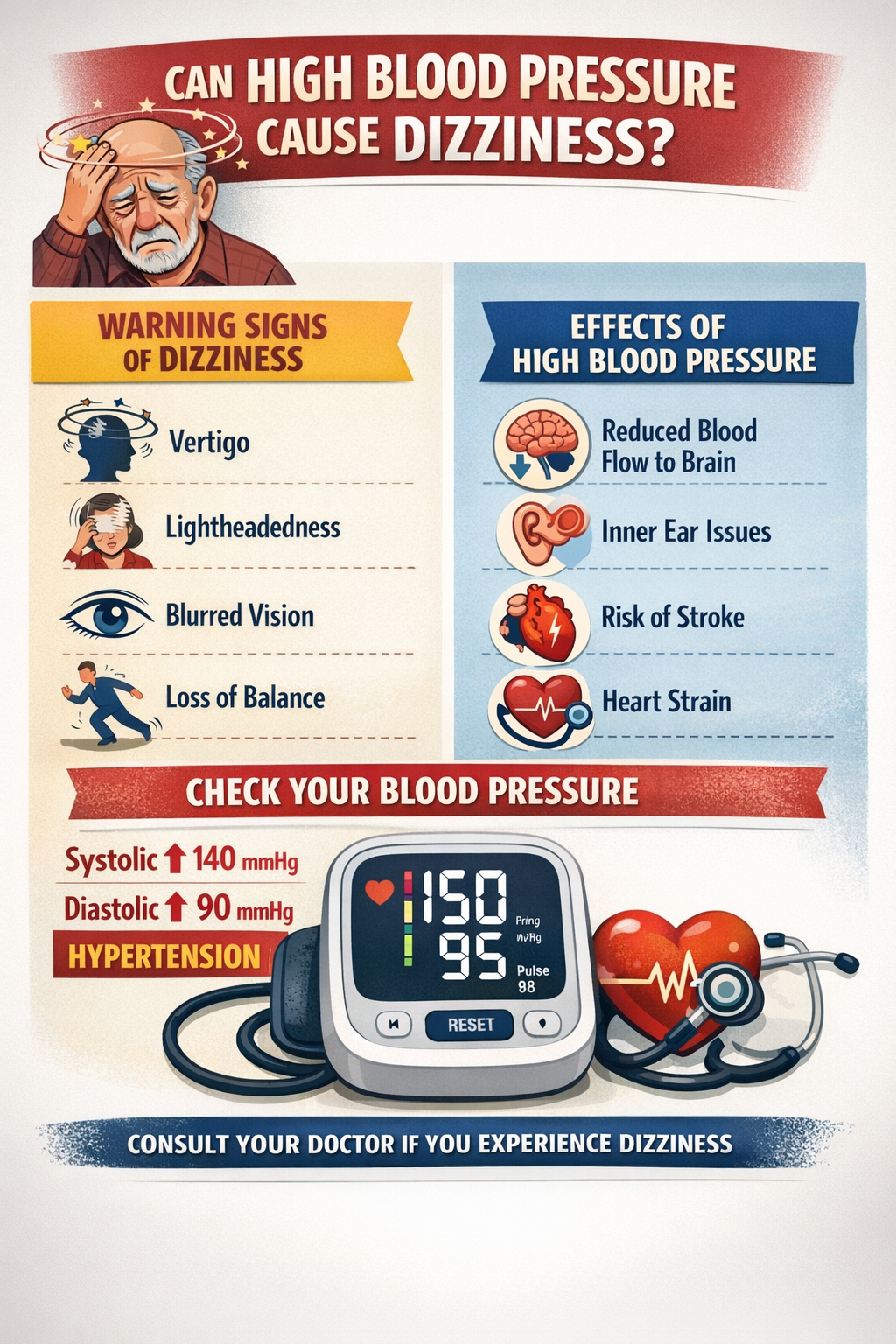
Can high blood pressure cause dizziness? Many people assume the answer is yes. It sounds like it should be true. But in most cases, high blood pressure does not directly cause dizziness. That is one reason it is often described as a silent condition. A person can have high blood pressure for a long time without feeling anything unusual.
That said, there are important exceptions. Very severe blood pressure elevations, certain blood pressure medicines, and sudden blood pressure changes can sometimes be linked with dizziness. The key is not to guess. It is better to check your blood pressure and look at the full pattern of symptoms.
Can high blood pressure cause dizziness?
Usually, no. Regular high blood pressure does not typically make people feel dizzy. Most people with hypertension do not have clear symptoms at all. Dizziness is more often linked to something else, such as low blood pressure, dehydration, medication side effects, inner ear problems, low blood sugar, anemia, or heart rhythm issues.
Why people connect dizziness with blood pressure
The confusion is understandable. Blood pressure changes can affect how you feel, especially when pressure drops suddenly or when the body is under strain. So people often feel lightheaded and assume high blood pressure must be the cause. But routine hypertension usually is not the reason.
In simple terms, dizziness is more often connected to blood pressure that is too low, blood pressure that changes quickly, or another medical issue entirely.
7 important facts about high blood pressure and dizziness
1. High blood pressure is often symptomless
This is the main point many people miss. High blood pressure usually does not announce itself with obvious symptoms. You may feel completely normal and still have elevated readings. That is why routine blood pressure checks matter.
2. Dizziness is more often linked to low blood pressure
If you feel faint, lightheaded, or unsteady, low blood pressure is often more likely than high blood pressure. This can happen after standing up too quickly, becoming dehydrated, overheating, or not eating enough.
3. Very high blood pressure can be different
While everyday high blood pressure usually does not cause dizziness, a hypertensive crisis is different. This refers to a blood pressure reading of 180/120 mm Hg or higher. At that level, there is a risk of serious complications, and symptoms such as severe headache, chest pain, vision changes, or dizziness may happen.
4. Blood pressure medicines can sometimes cause dizziness
Sometimes the problem is not the high blood pressure itself but the treatment. Some medicines used to lower blood pressure can make people feel dizzy, especially when first starting them, after a dose change, or when standing up quickly.
5. Sudden blood pressure swings may cause lightheadedness
A person can have high blood pressure overall but still have episodes where the pressure falls suddenly. That drop can cause lightheadedness, weakness, or even fainting. This is one reason the timing of symptoms matters.
6. Not all dizziness feels the same
Some people say they feel dizzy when they really mean lightheaded. Others mean the room feels like it is spinning. That difference matters. Spinning sensations, known as vertigo, are more commonly linked to inner ear problems. Feeling faint or woozy is more likely to be related to blood flow, blood pressure, dehydration, or medication effects.
7. Other causes are often more likely
If you feel dizzy, it is worth remembering that many common problems can cause it. These include dehydration, low blood sugar, anemia, overheating, anxiety, heart rhythm problems, medication side effects, and inner ear conditions. That is why dizziness should not automatically be blamed on hypertension.
When can high blood pressure and dizziness happen together?
There are a few situations where both may appear at the same time:
- Hypertensive crisis: very high blood pressure with symptoms such as severe headache, chest pain, shortness of breath, confusion, or vision changes
- Medication effects: dizziness after starting or adjusting blood pressure treatment
- Blood pressure swings: sudden drops in pressure, especially when standing up
Warning signs you should not ignore
Get urgent medical help if dizziness happens with any of the following:
- blood pressure of 180/120 mm Hg or higher
- chest pain
- severe headache
- trouble speaking
- confusion
- vision changes
- sudden weakness
- facial drooping
- seizures
- shortness of breath
These symptoms may point to a hypertensive emergency, stroke, heart problem, or another serious condition.
When to seek medical help
Seek emergency care right away if your blood pressure is 180/120 mm Hg or higher and you also have dizziness, chest pain, a severe headache, breathing trouble, confusion, or stroke-like symptoms.
Book a medical appointment soon if you keep feeling dizzy, your blood pressure readings are repeatedly high, or you think your medication may be causing symptoms. Recurrent dizziness deserves proper assessment, even when it does not seem severe.
What may help?
What helps depends on the cause:
- if dehydration is the cause, fluids may help
- if low blood pressure is the issue, standing up more slowly and getting checked may help
- if medicine is involved, your clinician may need to review your treatment
- if very high blood pressure is present with red-flag symptoms, urgent care is needed
The safest approach is to avoid guessing. Check your blood pressure and pay attention to the full symptom picture.
FAQs
Is dizziness a common symptom of high blood pressure?
No. High blood pressure usually does not cause symptoms, including dizziness.
Can very high blood pressure make you dizzy?
Yes, it can happen during a hypertensive crisis, which is a medical emergency and needs urgent attention.
Is dizziness more likely from low blood pressure?
Yes. Dizziness is more often linked to low blood pressure or sudden blood pressure changes than to routine high blood pressure.
Bottom line
Can high blood pressure cause dizziness? Usually not. Most people with high blood pressure do not feel dizzy or unwell. But very high blood pressure, medication effects, or sudden blood pressure swings can sometimes be involved. If dizziness happens with severe symptoms or a very high reading, treat it as urgent. If it keeps happening, get checked rather than assuming the cause.
Related Articles
- High Blood Pressure Signs
- Sudden Dizziness Causes and Warning Signs
- Eye Twitching Causes
- Signs of Dehydration in Adults
Medical Disclaimer: This article is for educational and informational purposes only and is not a substitute for professional medical advice, diagnosis, or treatment. Symptoms can have many possible causes. Always consult a qualified healthcare professional if you have concerns about your health, especially if symptoms are severe, persistent, or worsening.
Reviewed for clarity: April 3, 2026
Last updated: April 3, 2026
1 thought on “Can High Blood Pressure Cause Dizziness? 7 Important Facts to Know”