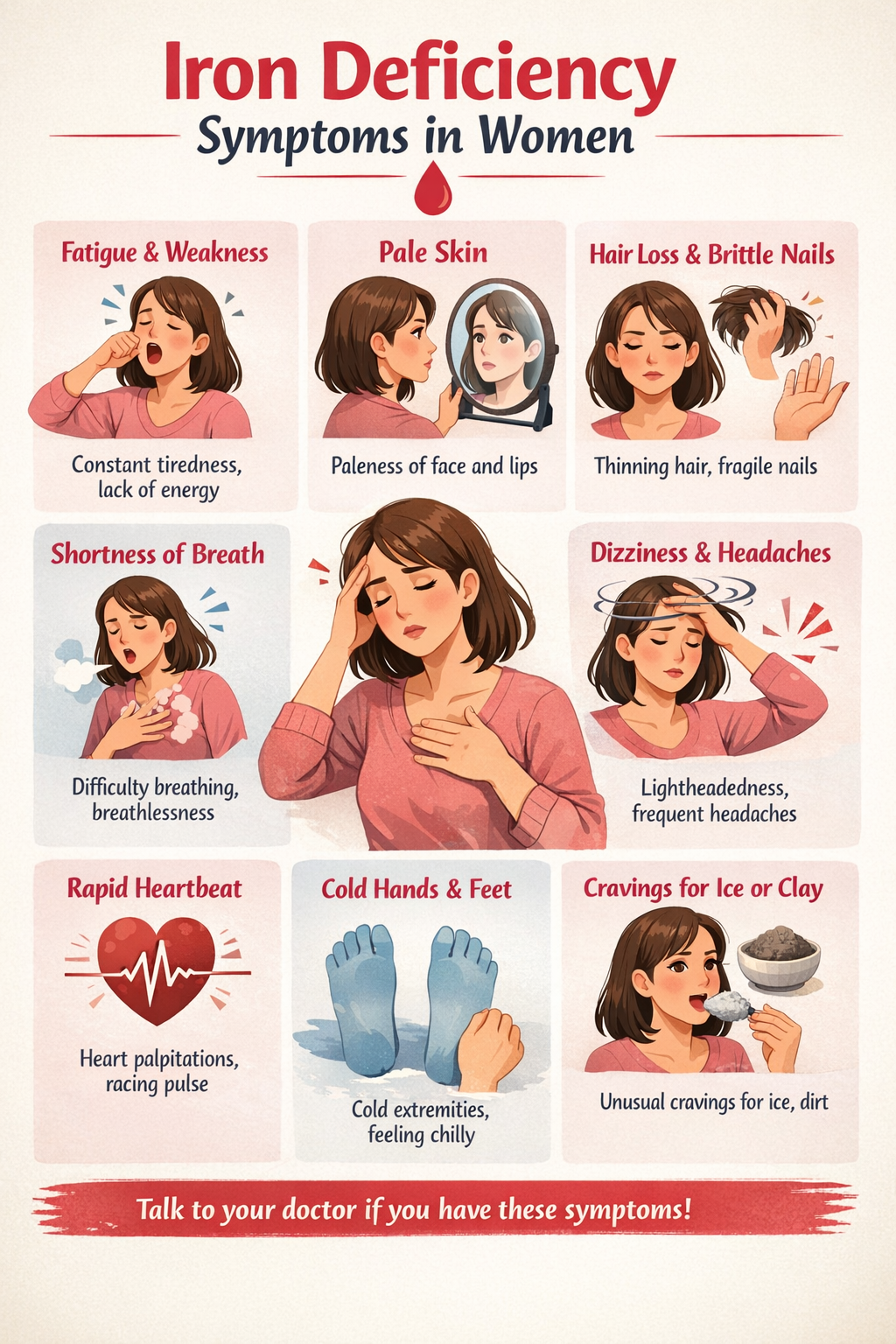
Iron deficiency symptoms in women can be easy to miss at first. Many women blame stress, poor sleep, or a busy life, but low iron can quietly affect how your body carries oxygen and leave you feeling tired, weak, dizzy, and unwell.
Iron helps your body make hemoglobin, the part of red blood cells that carries oxygen around the body. When iron levels fall too low, your body may struggle to deliver enough oxygen to your muscles, brain, and organs. That is why iron deficiency symptoms in women can show up in many different ways, from fatigue and dizziness to paleness and shortness of breath.
Here are 10 iron deficiency symptoms in women you should never ignore.
1. Constant Fatigue Is One of the Most Common Iron Deficiency Symptoms in Women
This is not just normal tiredness. Many women with low iron feel drained even after a full night of sleep. Simple daily tasks can start to feel harder, and your energy may feel unusually low for weeks or months.
Because this type of fatigue often builds up slowly, it is easy to normalize it and assume it is just part of a busy life.
2. Dizziness or Feeling Lightheaded
Some women with low iron feel dizzy, faint, or lightheaded, especially when standing up quickly or doing physical activity. This can happen when the body is not delivering oxygen as efficiently as it should.
If dizziness keeps happening alongside tiredness or breathlessness, it is worth getting checked.
3. Pale Skin or a Washed-Out Appearance
Iron deficiency can lower hemoglobin levels, which may make the skin look paler than usual. On some skin tones, this may be easier to notice in the inner eyelids, gums, lips, or nail beds rather than on the face alone.
If people keep telling you that you look tired or unwell, and you have other symptoms too, this can be an important clue.
4. Shortness of Breath Is One of the More Noticeable Iron Deficiency Symptoms in Women
If you suddenly get more breathless than usual after walking, climbing stairs, or doing ordinary chores, low iron may be one possible reason.
When the blood is not carrying enough oxygen efficiently, the body may try to compensate by making you breathe harder and your heart work faster.
5. Weakness or Feeling Physically Drained
Some women with low iron say they feel weak, shaky, or like they do not have the same strength they used to. This often happens together with fatigue, but it can also stand out on its own.
If your body feels unusually worn out and your stamina has dropped without a clear reason, iron deficiency is worth considering.
6. Frequent Headaches
Headaches can happen for many reasons, but low iron can be one possible cause. If oxygen delivery to the brain is affected, some women may experience recurrent headaches or a heavy feeling in the head.
If headaches have become more frequent and you also feel tired, dizzy, or pale, the pattern becomes more meaningful.
7. Cold Hands and Feet Can Be Iron Deficiency Symptoms in Women
Feeling unusually cold, especially in your hands and feet, can happen with iron deficiency. Some women notice that their extremities feel cold even when the room temperature seems comfortable to everyone else.
This is even more worth paying attention to if it happens together with fatigue, paleness, or breathlessness.
8. Brittle Nails or Spoon-Shaped Nails
Low iron can sometimes affect the nails, making them thin, brittle, weak, or more likely to break. In more advanced cases, nails may begin to curve upward in a spoon-like shape. This change is called koilonychia.
If your nails have changed noticeably and you also have fatigue or hair shedding, it is worth getting evaluated.
9. Craving Ice or Other Non-Food Items
Some women with iron deficiency develop unusual cravings, especially for ice. This is called pica. Less commonly, cravings may involve chalk, clay, paper, or dirt.
If this is happening, it should not be brushed off as just a strange habit. It is a sign that something may be wrong nutritionally.
10. Fast Heartbeat or Heart Palpitations
When iron levels are low, the heart may work harder to move oxygen around the body. Some women notice that their heart races, pounds, or feels like it is skipping beats.
If this is happening with tiredness, dizziness, or shortness of breath, it deserves medical attention.
Why Women Are More Likely to Develop Low Iron
Women of childbearing age are at higher risk of low iron for a few main reasons. Heavy periods can slowly lower iron stores over time. Pregnancy increases the body’s demand for iron. Some women also do not get enough iron through diet, while others may have trouble absorbing it because of digestive or intestinal problems.
That is why low iron should not be guessed at casually. The reason behind it matters.
Other Symptoms Some Women Notice
Some women also report brain fog, trouble focusing, hair shedding, restless legs, cracks at the corners of the mouth, or a sore tongue. These symptoms can have many causes, but they are sometimes seen with iron deficiency or iron-deficiency anemia.
When Should You See a Doctor?
You should think about seeing a healthcare professional if you feel unusually tired for weeks, get dizzy or short of breath often, have heavy periods, notice pale skin, brittle nails, hair loss with exhaustion, or develop cravings for ice or non-food items.
You should also get checked if your symptoms are getting worse or are making daily life harder.
How Do Doctors Check for Iron Deficiency?
Doctors often use blood tests to look for iron deficiency or iron-deficiency anemia. These may include a complete blood count and ferritin testing. A doctor may also look for the reason your iron levels dropped, especially if symptoms are significant or keep coming back.
What May Help?
Treatment depends on the cause. It may include improving iron intake through food, using iron supplements, treating heavy menstrual bleeding, checking for hidden blood loss, or addressing problems with digestion or absorption.
Iron supplements can help many people, but they can also cause side effects such as constipation. It is better to confirm the problem before starting treatment on your own.
Foods That Can Help Support Healthy Iron Levels
Foods that contain iron include red meat, beans, lentils, spinach and other leafy greens, fortified cereals, fish, eggs, and some seeds. Eating iron-rich foods together with vitamin C sources such as oranges, tomatoes, or peppers may help the body absorb iron better.
Frequently Asked Questions
Can low iron make you feel dizzy?
Yes. Dizziness and lightheadedness are common symptoms of iron deficiency and iron-deficiency anemia.
Can iron deficiency cause hair loss?
It can contribute to hair shedding in some people, although hair loss can happen for many different reasons.
Are women more likely to have iron deficiency than men?
Yes. Women, especially those who menstruate or are pregnant, are at higher risk because of blood loss and higher iron needs.
Bottom Line
Iron deficiency symptoms in women are easy to overlook, especially when tiredness feels normal and life is busy. But fatigue, dizziness, pale skin, headaches, shortness of breath, brittle nails, cold hands and feet, unusual cravings, and heart palpitations should not be ignored.
If several of these signs sound familiar, getting the right medical advice and blood tests is the smartest next step.
Related Articles
- 9 Fingernail Changes You Should Never Ignore
- 8 Causes of Sudden Dizziness You Should Never Ignore
- 8 Reasons You Feel Tired All the Time Even After Sleeping
- 6 High Blood Pressure Signs You Should Never Ignore
Medical Disclaimer: This article is for educational and informational purposes only and is not a substitute for professional medical advice, diagnosis, or treatment. Symptoms can have many possible causes. Always consult a qualified healthcare professional if you have concerns about your health, especially if symptoms are severe, persistent, or worsening.
When to Seek Medical Help: Seek medical advice if you have ongoing fatigue, dizziness, pale skin, shortness of breath, frequent headaches, brittle nails, unusual cravings, or heavy periods with worsening weakness. Seek urgent care if you develop chest pain, severe shortness of breath, fainting, or rapidly worsening symptoms.
Reviewed for clarity: March 31, 2026
Last updated: March 31, 2026
Sources:
2 thoughts on “10 Iron Deficiency Symptoms in Women You Should Never Ignore”